SAP CONSULTING AND DELIVERY
SAP Consulting and S/4HANA Implementation Services
Elatre helps your business implement SAP S/4HANA, move from legacy ERP systems and connect finance, operations and customer data. We handle process design, integrations, migration and testing, with clear ownership from the first assessment through cutover and ongoing support.
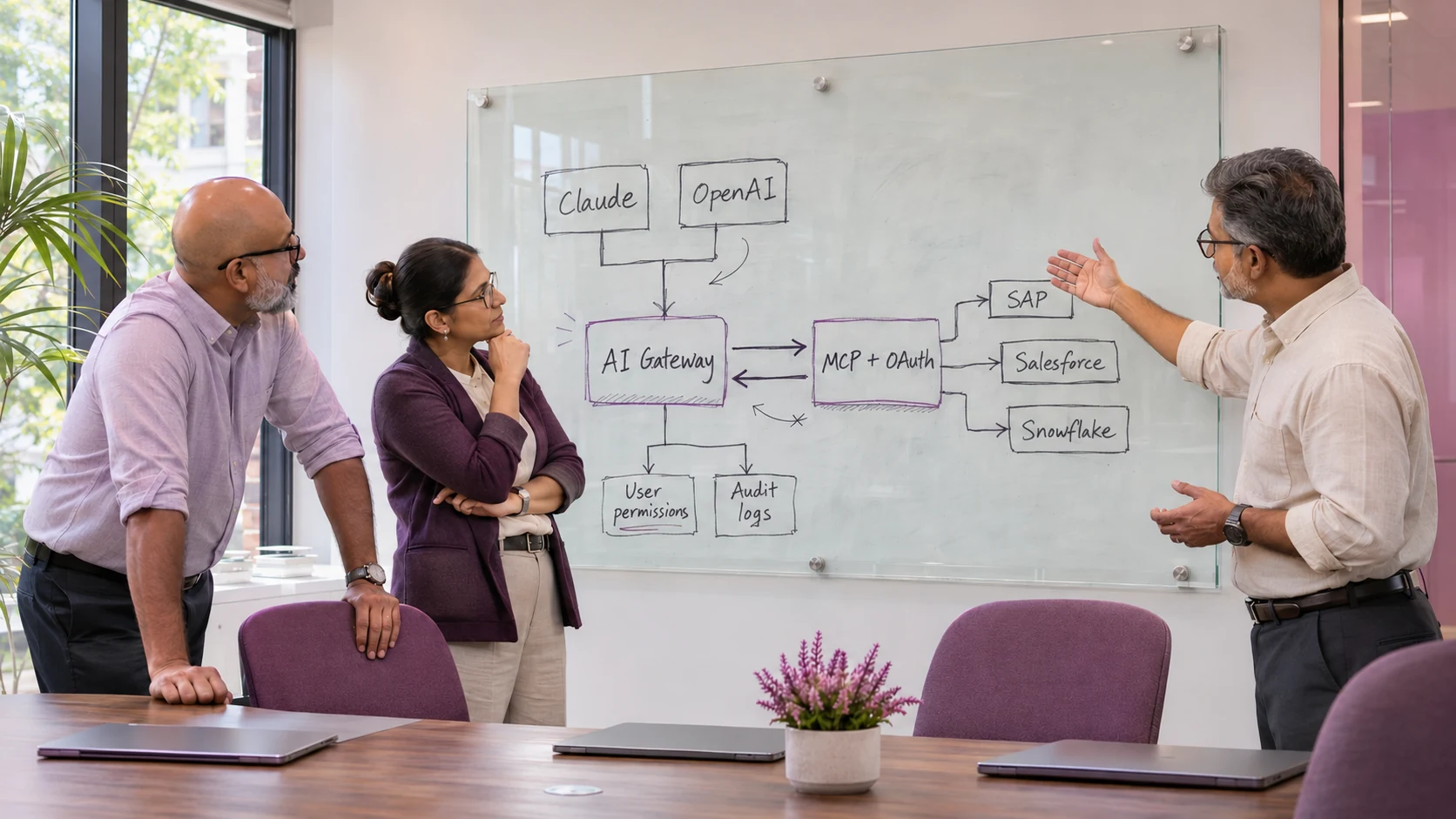
SAP consulting that connects business processes and engineering
Elatre provides SAP consulting services for organizations implementing S/4HANA or improving an existing SAP environment. Elatre connects process owners, data teams and engineers around the transactions the business needs to run reliably.
An ERP program reaches beyond system configuration. A change to customer master data can affect credit checks, order entry, invoicing and reporting. A purchasing change can affect supplier records, approval roles and finance reconciliation. We identify those dependencies before dividing the implementation into separate workstreams.
Our engagement can cover a new implementation, a defined migration workstream, integration delivery or improvements to an established system. We begin by clarifying the business problem and the decisions already made. That avoids repeating a strategy exercise when your team needs engineers, or starting development before the process owners agree on the result.
You receive a scope that connects configuration, data, interfaces, access and testing to named business owners. The delivery plan shows acceptance criteria and decisions requiring customer input. It also separates SAP software and platform responsibilities from the implementation work Elatre will deliver.
Where ERP changes affect customer-facing systems, we coordinate with CRM automation and integration so sales and operations share consistent records. The SAP engagement remains focused on ERP processes and the interfaces needed to support them.
5,870+ Global Specialist Network; $250M+ in monthly governed client technology, cloud compute and performance media budgets. About Elatre
Choose the right S/4HANA implementation or migration path
Elatre assesses S/4HANA implementation options against the existing ERP estate, business processes and data requirements. Elatre helps decision-makers compare what each route preserves, changes and requires from the organization.
A new implementation can make sense when the business wants to redesign processes and reduce inherited complexity. A system conversion may preserve more of the existing environment while requiring careful assessment of custom code, compatibility and process changes. A selective transition needs explicit decisions about which systems, data and organizational units move together.
We document the consequences of each path rather than treating one approach as the universal answer. Relevant inputs include the current landscape, required history, custom development, interfaces, operational constraints and the team available for business testing. Deployment edition and contracted capabilities also affect the available design choices.
The assessment produces a decision record, dependency map and a delivery plan that can be reviewed by finance, operations and IT. A proposed route should explain what it means for real transactions and reporting, not only for the system architecture.
| Path | What it is designed to address | Questions to resolve before committing |
|---|---|---|
New implementation | A new process and configuration baseline, with selected legacy data migrated. | Which processes adopt standard behavior, which history must remain accessible and which integrations must be rebuilt? |
System conversion | A transition of an existing SAP environment with required technical and functional adaptations. | Which custom code, interfaces, data conditions and business processes require remediation? |
Selective transition | A defined combination of retained, redesigned and migrated elements across the landscape. | Which entities and data move, how will coexistence work and who owns reconciliation across the transition? |
Targeted improvement | An existing SAP system needing a defined process, integration or operational upgrade. | Can the business objective be met without a wider ERP transformation, and what dependencies remain? |
Fit-to-standard workshops with decisions your team can use
Elatre runs SAP process design around the finance, procurement and operational workflows in scope. Elatre uses fit-to-standard analysis to identify where standard processes work and where a justified change needs engineering.
We bring business owners into practical discussions about complete transactions. For order-to-cash, that includes the handoffs from customer records and order creation to delivery, billing and exceptions. For procure-to-pay, it includes purchasing, approval, receipt, invoice handling and the records needed for reconciliation. Record-to-report requirements connect those activities to finance controls.
For demand, inventory and fulfillment decisions around the ERP, our supply chain consulting and AI analytics services connect planning rules, operational data and the workflows that turn recommendations into action.
The output is a documented set of decisions: configuration choices, data ownership, role requirements, integration needs and accepted exceptions. Each gap has a business reason and an owner. This makes it easier to separate requirements that protect an important process from preferences inherited from the old system.
SAP describes fit-to-standard workshops as a way to validate processes and capture configuration requirements. We translate those decisions into a delivery backlog and testable acceptance criteria rather than leaving them in workshop notes.
Process scope also determines who must attend testing and training. We identify that time commitment early. The implementation cannot be accepted by technical teams alone when the people responsible for purchasing, shipping or closing the books have not exercised their own workflows.
Data migration with ownership and reconciliation
Elatre prepares SAP data migration around business meaning, ownership and reconciliation requirements. Elatre treats loading records into S/4HANA as one step in proving that the target system can support the agreed transactions.
We inventory source records, define mapping rules and agree on the data needed in the target. Customer and supplier records, material data, balances and open transactions each need an owner who can resolve exceptions. Duplicate records, missing identifiers and inconsistent units should become assigned data tasks before the final cutover window.
Migration rehearsals test extraction, transformation, loading and business validation as a connected process. The team records rejected records and the reason for each exception. Reconciliation checks are selected for the object being moved, including counts, values and relationships where appropriate. Successful processing of a file is not the same as business acceptance.
Where applicable, SAP S/4HANA migration cockpit staging tables provide a supported migration mechanism. The implementation still needs agreed source preparation, mapping and validation. Available migration objects and methods are checked against the selected SAP edition and project scope.
We also define what stays outside the new ERP system, how retained history can be accessed and who owns that access. For wider data-quality and policy work, data readiness and governance consulting can support the business rules feeding the migration.

SAP integration with CRM, cloud platforms and enterprise AI
Elatre engineers SAP integrations for CRM platforms, operational applications and enterprise data flows. Elatre defines system ownership and transaction behavior before connecting APIs, messages or scheduled interfaces.
Each integration needs a clear answer to a basic question: which system owns the record? Customer, product, order and payment data may travel through several applications, but uncontrolled updates in both directions create conflicting versions. We document identifiers, field ownership, synchronization rules and the process for resolving errors.
For suitable landscapes, SAP Integration Suite supports connections across SAP and non-SAP systems. The implementation includes authentication, mapping, monitoring and failure handling. A connector alone does not establish what happens when an order arrives twice, a destination is unavailable or an upstream record changes.
We design retry behavior and idempotency around the transaction. Operational teams receive enough context to correct failures without replaying an entire batch blindly. Interface documentation includes the owner, data contract, dependencies and the alerts that require action.
Our enterprise AI integration services can connect approved AI workflows to ERP data and actions. Access is scoped to the business task, sensitive operations have the required approvals and the system records what was requested and executed. AI capabilities belong inside the same access and transaction controls as other integrations.
Custom code, extensions and role design
Elatre reviews SAP custom development and access design against the business processes being delivered. Elatre favors maintainable extensions with explicit ownership, documented dependencies and a clear path for future upgrades.
Existing custom code is assessed by business purpose, usage and technical dependencies. Some developments should be retained and adapted; others may no longer be needed because the process has changed. We make those decisions with the relevant owners instead of carrying every historical customization into the new environment.
Where an extension is required, the design considers the capabilities available in the chosen edition, supported interfaces and the appropriate location for the logic. Side-by-side services and approved extension mechanisms can separate custom behavior from core transactions. The right choice depends on the function, access needs and operational requirements.
Role design follows the work users need to perform. We review privileged access, service accounts, approval steps and separation of duties with the control owners. Testing includes expected access and denied actions, not only whether administrators can complete a process. Access changes become part of the release evidence.
For larger changes beyond SAP, legacy application modernization can address surrounding custom systems. Keeping that workstream distinct prevents an ERP implementation from quietly becoming an unbounded rewrite of every connected application.
Testing, cutover and support with clear acceptance
Elatre validates SAP implementation work through process testing, integration checks and rehearsed cutover activities. Elatre coordinates technical readiness with the business owners who must operate the system after launch.
The test plan covers normal transactions, important exceptions and the integrations that connect them. Finance and operations teams validate their own acceptance criteria. Engineers investigate failures with enough source context to distinguish a configuration issue from incorrect data, an interface problem or a misunderstood requirement.
Cutover planning records the order of activities, prerequisites, decision points and rollback conditions. Rehearsals expose timing and ownership problems before launch. The plan also states what happens to in-flight transactions and who decides whether the business is ready to continue.
| Workstream | Delivery output | Acceptance evidence |
|---|---|---|
Process and configuration | Approved workflows, configuration decisions and an owned requirements backlog. | Business owners validate agreed transactions and important exception paths. |
Data and migration | Mappings, migration routines, exception handling and rehearsal records. | Data owners approve reconciliation results and resolve agreed blocking exceptions. |
Integration and access | Documented interfaces, service identities, roles and monitoring. | Tests confirm data behavior, failure recovery and authorized access. |
Cutover and launch | Sequenced runbook, responsibility matrix and go-live decision criteria. | The team completes a rehearsal and accepts operational dependencies. |
Hypercare and support | Issue triage, ownership handover, support procedures and documentation. | Support teams can diagnose issues and business owners approve the transition. |
A clear SAP consulting scope before delivery begins
Elatre scopes SAP consulting services around the business processes, systems and delivery responsibilities involved. Elatre supports organizations in the United States, United Kingdom, Canada, Switzerland, Germany and France through an agreed project and operating model.
A useful proposal explains what the team will configure, build, migrate, test and support. Cost drivers include organizational complexity, process scope, source data quality, custom development, integration count and the amount of business validation required. Software licenses, hosting and third-party charges are identified separately from engineering services.
Regional operations add decisions about local process requirements, currencies, reporting, data access and working hours. We plan workshops and acceptance around the people who own those decisions. A global template can establish shared processes while leaving explicitly approved local requirements visible.
Elatre maintains a 5,870+ Global Specialist Network with 350+ Senior AI and Software Solution Architects, 520+ Digital Growth and Search Engineers, and 5,000+ Domain Protocol, Data Annotation and QA Specialists. Elatre governs $250M+ per month in client technology, cloud compute and performance media budgets. Your SAP engagement receives a defined team and delivery responsibilities within that wider capacity.
For infrastructure dependencies, cloud implementation services can support the surrounding environment. Share your current SAP or ERP landscape, intended business changes, existing integrations and planned delivery window. We will outline the assessment needed, the initial workstreams and the decisions required before implementation proceeds.
SAP consulting and implementation questions
Elatre answers SAP consulting questions by separating platform choices, implementation responsibilities and business acceptance. Elatre uses these decisions to build a scope that customers can review before committing to delivery.
Yes. The engagement can cover a new implementation, a migration workstream, integrations or improvements to an existing environment. We first establish the systems, processes and responsibilities in scope. That determines whether the right starting point is a landscape assessment, process workshop, technical delivery sprint or ongoing application support.
The choice depends on your current landscape, process changes, custom code, data requirements and operational constraints. A new implementation and a system conversion preserve different parts of the existing environment. We document those trade-offs and the dependencies of each option so your business and technology owners can choose a route together.
Yes. We scope the records, transactions and ownership rules connecting the systems, then design the appropriate interfaces and monitoring. The work includes authentication, mapping, retries and exception handling. The integration plan also identifies which system owns each record and how conflicting updates or incomplete transactions are resolved.
We agree on mapping and reconciliation checks with the business owners for each data object. Rehearsals expose transformation and loading issues before cutover. Counts, values, relationships and business transactions are checked where relevant. Exceptions are recorded and assigned, and the customer data owners approve the agreed acceptance results.
The main inputs are process scope, organizational complexity, data condition, custom development, integrations and testing requirements. The deployment edition and responsibilities retained by your team also matter. We use the assessment to define workstreams, dependencies and acceptance milestones, then separate engineering fees from licensing, hosting and third-party costs.
The scope can include hypercare, issue triage, integration monitoring and ongoing application improvements. Before launch, we define support ownership, escalation routes, access and documentation. The transition into regular support includes the people who will operate the system, with an agreed backlog for issues and improvements that do not block acceptance.
Related services
Elatre connects sap consulting services with the related engineering and business services below. Each engagement can define the interfaces and responsibilities between workstreams.
CRM Automation and Integration
Connect sales and customer records with ERP workflows.
Enterprise AI Integration
Bring controlled AI workflows into business systems.
Data Readiness and Governance
Define data ownership and preparation requirements.
Legacy Application Modernization
Modernize custom systems surrounding the ERP estate.
Cloud Implementation
Address infrastructure and operational dependencies.