Microsoft Entra Access Reviews for Vendors, Guests and Enterprise Applications
Elatre implements Microsoft Entra access reviews for US organizations that need to prove who still needs a group, application or vendor workspace. We connect each assignment to a business owner, configure the review, and test the access a decision actually changes. Your team receives a repeatable review calendar and an evidence record.

Elatre’s 5,870+ specialists include 520+ SEO, PPC and GEO growth engineers, 350+ senior AI and software architects, and 5,000+ QA and domain specialists. We have delivered 5,000+ projects across 800+ brands and govern $250M+ monthly ($3.0B+ annually) in client technology and media budgets. Our US offices are in New York (99 Wall Street), Houston (13201 Northwest Freeway) and South San Francisco (611 Gateway Blvd).
When do Microsoft Entra access reviews solve a vendor governance problem?
Start with a resource whose owner can answer a specific question about business need. Elatre connects the vendor assignment, contract sponsor and application owner so a reviewer can make a defensible decision. The result shows who approved continued access, what changed when access ended and whether the change took effect.
Microsoft’s Rijksmuseum case describes a museum where an internal audit found that some external workers retained access after their contracts ended. The organization worked with InSpark on Microsoft Entra ID Governance. Microsoft reports approximately 1,100 users in the system and a 15% reduction in time spent managing user access. The figure applies to the wider identity governance program. For a US organization planning a vendor review, the directly relevant lesson is to connect the contract owner’s knowledge with the access decision and its completion record. Read Microsoft’s Rijksmuseum case study.
Microsoft also describes how German football club Bayer 04 Leverkusen worked with SITS Deutschland to address manual access processes across its business and sports operations. The club introduced recurring access reviews alongside entitlement management, lifecycle workflows and privileged identity management. This is a useful division of responsibilities. A lifecycle process handles known events such as a departure, while a scheduled access review can catch a role or relationship whose current need has become unclear. The two controls reinforce each other when the business identifies which team owns each event. Read Microsoft’s Bayer 04 Leverkusen customer story.
For a company preparing an audit, our cybersecurity architecture team helps define the control owner. Microsoft 365 consulting identifies which collaboration resources participate. Ask the owner to retrieve one contractor’s current assignment, decision and effective removal before funding a larger campaign.
How does Elatre configure Microsoft Entra ID Governance for access reviews?
Elatre selects a supported group or enterprise application, defines the identities in scope and names reviewers who know the work. We set the review dates, reminder path and handling of missing decisions. The first cycle tests a representative assignment with the application owner before any broad automatic application of results.
Choose a project group, enterprise application or another supported resource with a clearly defined owner. We identify how external users gain access and whether the selected membership accurately represents effective access. Nested groups, direct application assignments and application-local accounts can require separate checks.
Different reviewers have different evidence. A line manager can confirm whether a staff member still works on a project. A resource owner knows what information a workspace contains. A contract sponsor knows whether the external relationship is still in force. One person may not know all three. We identify the minimum reliable evidence for each resource and design the decision route accordingly. Complex cases can be escalated to a named owner who can resolve the missing business context.
Use Microsoft’s guide to creating group and application access reviews to confirm which resource and settings the tenant supports. If elevated roles are involved, privileged access management services define the separate eligibility and activation process. The resource owner records whether Entra or an application-local system controls the ultimate entitlement.
| Program control | Elatre delivery | Owner-visible evidence |
|---|---|---|
| Population scope | Map identities, assignments and source groups | Resource owner reconciles a sample of access paths |
| Reviewer assignment | Choose sponsors, application owners and delegates | Each reviewer can identify a business purpose |
| Decision application | Define nonresponse, exceptions and manual checks | Test identity follows the documented outcome |
| Recurring operation | Transfer scheduling, escalation and exports | Control owner retrieves a completed decision |
| Basis | Control unit: one identity-to-resource assignment per review instance. Repeat identities can legitimately occur across different resources. | |
How much reviewer time should we budget for recurring Entra access reviews?
Estimate reviewer effort from the number of identity-to-resource assignments, the share that needs a person’s judgment and the time required to locate business evidence. One supplier may hold assignments in several applications. Elatre separates scheduled review time from the time application owners need to resolve unclear sponsorship or verify an applied decision.
Reviewer workload changes response quality. Sending a manager a large undifferentiated list on the final day of a fiscal quarter invites hurried decisions. A staged launch with realistic deadlines, clear reminders and a backup reviewer can produce better evidence. We estimate the workload using the number of unique assignments and the number of owners who can verify them. An approval that contains no meaningful assessment may finish a campaign on time while doing little to improve governance.
With ServiceNow implementation services, a supplier exception can reference a ticket and accountable reviewer. An API integration can connect a permitted source of contract status where the customer has approved access. Count each distinct assignment once per cycle and record the separate cost of investigating a disputed decision.
| Review scope | Assignments per cycle | Minutes and human-review share | Owner hours per cycle |
|---|---|---|---|
| Supplier application | 100 | 6 minutes × 100% | 10.0 |
| Partner workspace | 240 | 5 minutes × 50% | 10.0 |
| Contractor project | 60 | 8 minutes × 75% | 6.0 |
| Finance guest group | 45 | 8 minutes × 100% | 6.0 |
| Basis | Planning estimate for reviewer labor only. Remediation, license charges, technical verification and repeat reviews are separate. | ||
How should an Entra guest review handle nonresponse, denial and exceptions?
Elatre sets a nonresponse rule with the control owner before notices go out. A missed message is weak evidence about business need. For a sensitive resource, a second reviewer or supervised decision can resolve uncertainty. The agreed configuration determines what gets applied, who handles exceptions and when a disputed entitlement is reviewed again.
Imagine an external auditor who needs annual access during a short review window. The named internal sponsor has changed roles and no longer answers the campaign. Automatic removal may be appropriate for a sensitive workspace if the owner explicitly accepts the interruption risk. A lower-risk application might first route the decision to a backup owner. The project records the agreed behavior for an unanswered review, the expected communications and the person authorized to restore a legitimate assignment.
Separate a rejected assignment from a departed vendor. A reviewer can decide that a user no longer needs a particular group while the guest account remains appropriate for other work. Procurement may instead confirm that an entire supplier relationship has ended. The latter can trigger a broader lifecycle process with different approvals. Defining these boundaries prevents a local workspace decision from accidentally expanding into an organization-wide identity action.
Follow Microsoft’s guidance for reviewing external identities when the buyer also wants a guest-lifecycle decision. Removing a group assignment and deleting a guest account have different consequences. The cloud security team helps identify other authorized access that must be preserved when a scoped assignment is withdrawn.
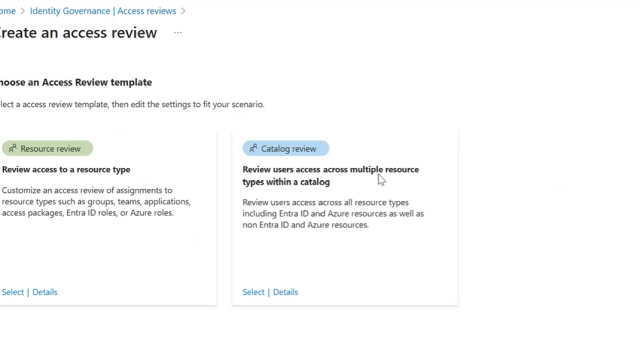
How do you verify that Microsoft Entra access review decisions actually change access?
Elatre checks the review record against effective access to the selected application. Direct assignment, nested group membership, local accounts and synchronization delays can create different outcomes. The team records the decision, time applied, alternate path and validation result so operations can distinguish a closed review from a completed access change.
Test what happens when a decision encounters a downstream dependency. A group membership change may reach Entra promptly while a connected business application synchronizes later. An application might keep a separate local account or rely on a different assignment path. Before marking a removal complete, verify the effective outcome for a representative approved test identity and account for the application’s normal propagation time. Document the owner who will resolve a mismatch between the review record and actual access.
For a selected assignment, the handover should identify the resource and identity, why the assignment entered scope, who was asked, what they decided, when they responded and whether the change took effect. Where business justification sits in a contract system or service ticket, provide an approved reference that an authorized reviewer can follow. Keep the evidence in line with the organization’s retention and access policies. A review report should not reproduce sensitive contract content simply to demonstrate that a decision occurred.
A software QA team can validate representative application roles using approved test identities. Where separate systems provision access, cloud implementation specialists document the source and expected propagation delay. An application owner signs the final verification when Entra and the target system agree.
- Microsoft Entra
 Microsoft 365
 Microsoft Teams
 Microsoft Azure
- ScopeContractor has a direct project group assignment
- DecisionResource sponsor confirms the project is closed
- ApplicationIdentity owner applies the approved group removal
- VerificationApplication owner validates the remaining effective rights
How should we compare access review service providers and structure a 30-day pilot?
Ask each provider for a working example of a retained assignment, a removal and an exception with a named owner. Elatre delivers a pilot on a defined resource, then separates expansion, ongoing review operations and Microsoft licensing in the proposal. Each stage has an owner-visible acceptance test before another application enters scope.
A pilot on a single, well-owned application is usually easier to scope than a department-wide campaign spanning dozens of resources. The work includes validating group ownership, checking licensing for the intended review features, defining the eligible identity population, writing reviewer instructions and testing effective removal. If an acquired business has incomplete owner records, budget for those discovery conversations. Enabling recurring review on a list with no accountable reviewer leaves the most expensive problem unresolved.
For risk registers monitored by managed security operations, agree who investigates unexpected access after removal. A reviewer’s denial and a security incident have different owners. The control design should establish when a technical discrepancy becomes an escalation, without sending every late or unanswered routine review to the incident queue.
| Delivery option | Ownership question | What a buyer should inspect |
|---|---|---|
| Elatre implementation | Who joins the identity, application and business owners? | An end-to-end review record with target-system evidence |
| Tenant administration partner | Who supplies business justification? | Named resource owner and sponsor escalation |
| GRC consulting provider | Who tests configuration and applies results? | A verification record from the reviewed resource |
| Internal identity team | Who manages recurring exceptions? | Review calendar, fallback reviewer and case ownership |
| Basis | Compare the agreed responsibilities, referenceable evidence and scope of support for application-specific access paths. | |
| Window | Pilot deliverable | Owner-visible test |
|---|---|---|
| Week 1 | Select application, assignments and reviewer group | Sponsor confirms the access question |
| Week 2 | Configure schedule, fallback and decision handling | Owner inspects confirmation and denial scenarios |
| Week 3 | Run a bounded cycle and investigate exceptions | Application team tests a representative change |
| Week 4 | Handover decision exports and recurring schedule | Control owner replays one complete record |
| Basis | Implementation covers the selected resource. Additional resources, ongoing operations and Microsoft licensing are separate scope items. | |
What should buyers ask about Microsoft Entra access review ownership and audit evidence?
Ask who selects the reviewer, how a decision can be challenged and which team can prove that the application changed. Elatre records the resource boundary, escalation path, evidence location and recurring operating owner. The buyer can then repeat the review when a sponsor changes or a new supplier joins the program.
Rehearse this with an assignment that had an exception. A contractor may need access for one additional week to close a project. The record should identify the temporary owner, the expiry date and the follow-up decision. Otherwise, an exception can become indefinite simply because everyone remembers approving it once. A later reviewer should be able to see what changed without relying on the original sponsor to explain it from memory.
Can a vendor guest retain one application while losing another?
Yes, where the assignments and their access paths are independent. We confirm each resource owner and test the scoped change. A retained assignment on one application can remain legitimate after another project ends.
Does denying an assignment delete the guest account in Microsoft Entra?
The configured resource and action control the outcome. A denial on a group membership can remove that membership when results are applied. Any broader external-identity cleanup needs separately defined scope and authorization.
Can the first review collect decisions without automatic removal?
Yes, for review types and configurations that support manual application. We validate the settings with the tenant owner and use the pilot to compare decisions with expected outcomes before enabling automatic application.
How should we handle an annual auditor who rarely signs in?
Use the engagement calendar, designated sponsor and applicable resource scope. Inactivity can help prioritize the review, but the accountable owner must judge whether a documented annual obligation still requires the access.
Who should review access when an external sponsor has left?
Name a fallback reviewer with knowledge of the agreement or resource. Route the exception to a resource owner who can verify continuing need, and document the replacement sponsor before the next recurrence.
Which Microsoft Entra licenses do we need?
Licensing depends on the review type, tenant entitlements and people in scope. We inventory the specific features and populations in the pilot and ask the customer’s licensing owner to confirm coverage before expansion.
Can an access review remove a nested group assignment automatically?
A user may appear through a nested group in the review. A removal decision cannot automatically remove that underlying nested membership through the reviewed parent group. Identify the actual granting group and its owner for remediation.
What should our team bring to an Entra scoping call?
Bring one group or enterprise application, its owner, sample external assignments and a past audit question. Include a retained assignment and one that should end so the acceptance test covers both outcomes.