Cloud implementation
Cloud Implementation Services Built Around Your Workloads
Build a cloud environment your business can use and your team can operate.
Elatre helps you plan, implement and transition business applications to the cloud. We connect infrastructure work with application development, integrations and operating procedures, so the project covers what happens before migration, during cutover and after the first release.
For US businesses, ecommerce teams and enterprises building or modernizing business software.
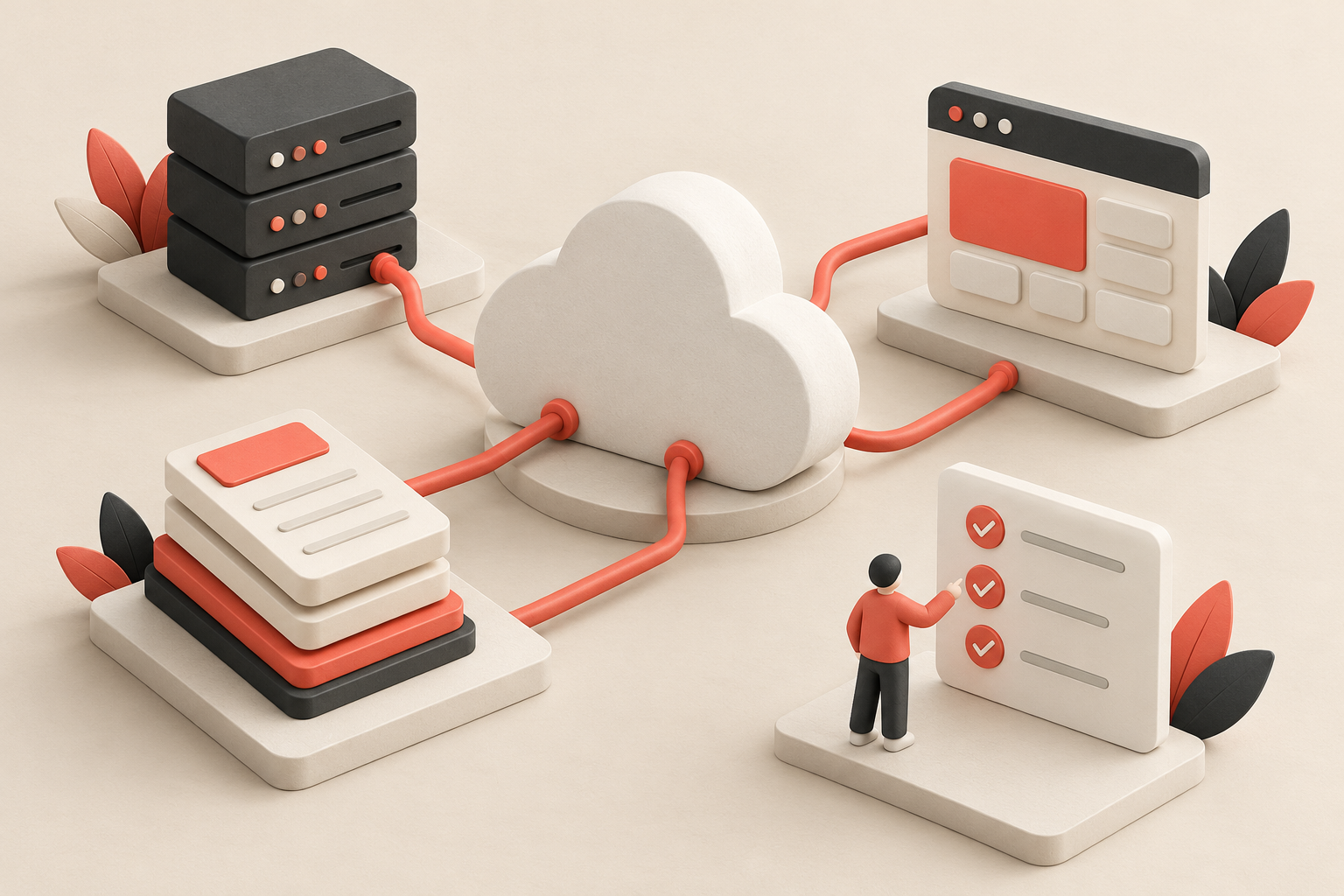
Cloud foundations, application delivery and operational readiness.
A practical starting point
What do cloud implementation services include?
Cloud implementation services turn a business requirement into a working cloud environment. The scope can include workload assessment, account structure, networking, access controls, application deployment, data migration, monitoring and recovery. The right combination depends on what you run today and who will own it tomorrow.
A new customer portal needs a different plan from a mature application with databases, scheduled jobs and years of integrations. We start by documenting those dependencies and the business processes they support. That helps avoid a technically successful move that breaks a reporting job or a customer workflow.
The migration approach is a business decision as well as a technical one. Rehosting moves a workload with limited application change. Replatforming changes selected services, such as a database or runtime. Refactoring changes the application more substantially. We compare the implementation effort, operating implications and dependencies before choosing a route for each workload.
Our software development services connect the infrastructure plan with the application itself. Where code or integration changes are necessary, we identify them before agreeing the migration sequence.
Define the workload
Agree the owners
Test the recovery path
Implementation scope
Cloud foundations, migration and ongoing delivery
We agree the work around your existing systems, business priorities and internal capabilities. Your proposal identifies the deliverables, dependencies and acceptance checks.
Workload discovery and planning
Output: Workload inventory, dependency map and implementation priorities.
Landing zone and security ownership
Output: Foundation design, access model and responsibility record.
Application and data migration
Output: Migration runbook, rehearsal findings and cutover checklist.
Cloud DevOps consulting
Output: Deployment workflow, configuration repository and release instructions.
Cost visibility and controls
Output: Cost baseline, allocation approach and prioritized actions.
Monitoring, backups and recovery
Output: Operational dashboards, alert ownership and recovery evidence.
Designed for your environment
Support for the systems behind your business
The implementation should fit the people using the application and the team responsible for keeping it running.
B2B applications and portals
Ecommerce and connected operations
Enterprise teams and internal platforms
How we work
A controlled path from discovery to handover
Each stage has a clear output and a review point. We agree the sequence around business hours, change windows and the availability of your application owners.
01 · 1. Establish the baseline
02 · 2. Build and validate the foundation
03 · 3. Rehearse and execute the transition
04 · 4. Stabilize and hand over
Beyond deployment
Leave your team with a system they understand
A cloud project should leave usable documentation: what was built, how it changes and where to look when something goes wrong. We organize the architecture, deployment instructions, access responsibilities and recovery steps around the people who will use them.
Elatre can bring infrastructure, custom application development and business integrations into the same project plan. This is useful when the difficulty sits between systems rather than inside one server. For workloads that use language models or other AI services, our AI cost optimization work can examine model usage and application costs alongside the cloud bill.
Access and ownership
Evidence of readiness
An operational next step
BEFORE WE START
Cloud implementation questions
Practical answers about planning, delivery and working together.
Yes. A project can start with an environment review rather than a migration. We examine the issues you are seeing, such as difficult releases, unclear costs or unreliable integrations, then propose a focused scope. Access and changes follow the approval process agreed with your team.
We consider application requirements, existing contracts, team experience, integrations, data location and operating cost. Discovery can assess your existing choice or compare options. We also examine whether part of the system should remain on premises or connect to another cloud. The recommendation explains the workload-specific tradeoffs and what your team must operate.
Some migrations require a planned interruption; others allow a staged transition. The answer depends on the application's architecture, data synchronization and connected systems. We identify the likely impact during planning, rehearse the sequence where feasible and agree the cutover and rollback decisions before production changes.
The main factors are workload count, architecture complexity, data volume, required application changes, security reviews and the available change windows. Cloud usage and third-party licenses are separate from implementation effort. We clarify these costs and assumptions in the proposal after understanding the environment.
We agree measurable objectives and review the evidence, but savings depend on usage, architecture and service choices. Compliance requirements also extend beyond a cloud configuration. We work with your security or compliance owners to implement the agreed controls and document their responsibilities and acceptance checks.
Send a brief description of the applications, your current hosting arrangement, the problem you want to solve and any target date. Architecture diagrams, a recent cost summary and known integration dependencies are helpful. Do not send passwords; we agree an appropriate access process when the project is scoped.
CONNECTED SERVICES
Related services
Useful resources
Official guidance referenced in our approach.
LET’S TALK
Plan a cloud implementation your team can own
Tell us what you run today, what needs to change and the constraints that matter. We will help define the implementation priorities, required decisions and a practical next step.