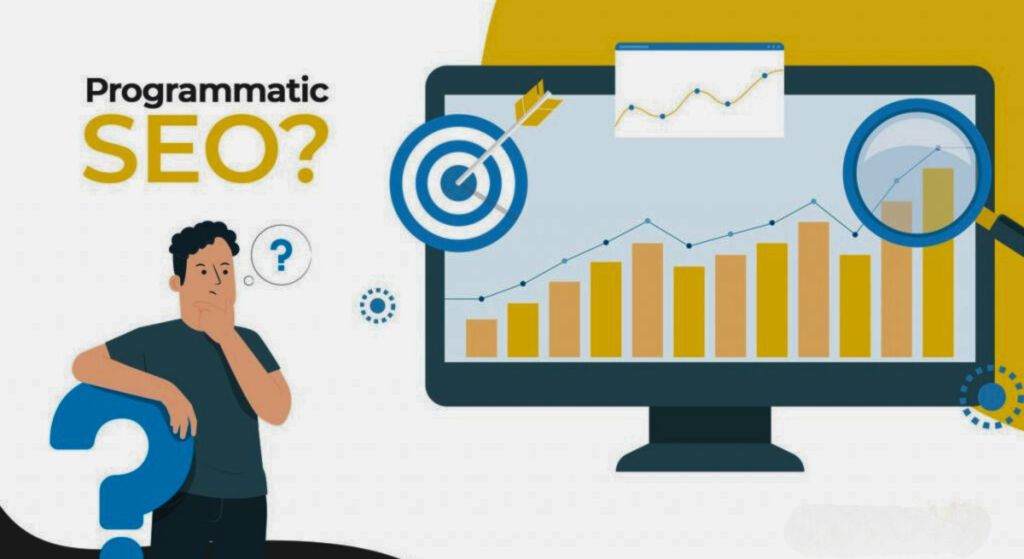
Being ahead of the curve is becoming increasingly important in the dynamic world of digital marketing. One such innovation that has revolutionized the way businesses approach online visibility is Programmatic SEO. As we delve into the intricacies of this powerful tool, we will uncover how it transforms not only the traditional SEO strategies but also the entire online presence of a brand.
The Basics of Programmatic SEO
Defining Programmatic SEO
Before we plunge into the depths of its transformative power, let’s establish a clear understanding of what Programmatic SEO entails. Programmatic SEO outperforms manual SEO by using automated processes and data-driven insights to increase a website’s exposure on search engine result pages (SERPs).
The Role of Automation in SEO
Automation, a cornerstone of programmatic SEO, brings efficiency and precision to the optimization process. Automation simplifies various chores, like link building, content generation, and keyword research, freeing marketers to concentrate on strategy and originality.
Critical Components of Programmatic SEO
Advanced Keyword Targeting
In the world of SEO, keywords reign supreme. Programmatic SEO furthers this by employing sophisticated algorithms to identify primary, long-tail, and latent semantic keywords. This ensures a comprehensive approach to targeting user queries.
Dynamic Content Optimization
Content is king, and in programmatic SEO, it becomes dynamic royalty. Through real-time analysis of user behavior and preferences, content is dynamically optimized to align with the ever-changing demands of the audience. This not only improves search rankings but also enhances user engagement.

Intelligent Link Building Strategies
For SEO to be successful, a strong backlink profile must be developed. Programmatic SEO employs intelligent algorithms to identify high-quality, relevant link-building websites. This strategic approach improves a site’s authority and establishes credibility within its niche.
Programmatic SEO vs Traditional SEO
Speed and Efficiency
Traditional SEO methods often involve time-consuming, manual processes. Programmatic SEO, on the other hand, operates at the speed of algorithms, reducing the time required for optimization tasks. This speed improves efficiency and allows for real-time adaptation to market trends.
Data-Driven Decision Making
In the traditional SEO landscape, decisions are often based on experience and intuition. Programmatic SEO relies on data-driven insights, ensuring every strategy is backed by analytics. This results in more informed and impactful decision-making processes.
Adaptability to Algorithm Changes
Search engine algorithms are continually evolving. Programmatic SEO’s data-driven nature enables it to adapt swiftly to algorithm changes, ensuring that a website remains optimized despite dynamic search engine updates.
The Impact of Programmatic SEO on Online Visibility
Enhanced SERP Rankings
Securing a top spot on the SERPs is the ultimate goal of every SEO plan. Programmatic SEO’s data-driven precision and dynamic optimization contribute to consistently higher rankings, ensuring increased visibility for the target audience.
Improved User Experience
Search engine rankings heavily consider user experience. Programmatic SEO’s focus on dynamic content optimization aligns the website with user preferences, leading to a more satisfying and engaging experience. This, in turn, contributes to improved rankings and prolonged user interactions.
Expanded Reach and Targeting
Programmatic SEO doesn’t just optimize for the current audience; it anticipates and adapts to the evolving needs of potential customers. Programmatic SEO broadens a brand’s online footprint by expanding reach and targeting new demographics, unlocking untapped markets.
Challenges and Considerations
Balancing Automation and Human Touch
Automation increases efficiency, but finding the right balance between automation and human contact is essential. Programmatic SEO should complement, not replace, human marketers’ creativity and strategic thinking.
Data Security and Privacy
The reliance on data in programmatic SEO raises concerns about security and privacy. Marketers must ensure that ethical data practices are followed, respecting user privacy while harnessing the power of data to drive optimization.

Advanced Insights through Programmatic SEO Analytics
In the dynamic landscape of online visibility, insights are the currency that drives strategic decisions. Programmatic SEO takes analytics to a new level, providing advanced insights beyond traditional metrics.
Understanding User Behavior in Real-Time
Programmatic SEO analytics delve into user behavior in real time, offering a granular view of how visitors interact with a website. This includes the pages they navigate, the time spent on each page, and their actions. By understanding user behavior at this level of detail, marketers can tailor content and optimize user journeys for maximum engagement.
Predictive Analytics for Future Trends
The capacity of programmatic SEO to forecast future trends based on historical data is one of its most notable characteristics. By leveraging predictive analytics, businesses can stay ahead of the curve, anticipating shifts in user preferences and search engine algorithms. With proactive optimization made possible by this foresight, a website can remain competitive and relevant in the ever-evolving digital landscape.
Keyword Performance and Market Trends
While traditional SEO analytics provide insights into keyword performance, programmatic SEO takes it further. Advanced algorithms analyze keyword trends, identifying emerging terms and predicting their potential impact. This helps stay ahead of competitors and allows businesses to capitalize on trending topics, giving organic website traffic.
Competitor Analysis and Benchmarking
Programmatic SEO analytics extend beyond individual website performance to include comprehensive competitor analysis. By benchmarking against competitors, businesses gain valuable insights into market dynamics, identifying areas for improvement and innovation. This competitive intelligence is instrumental in refining strategies to outperform peers in the online arena.
Ethical Considerations in Programmatic SEO
In this age of data-driven marketing, ethical issues are paramount. An insightful topic could be how programmatic SEO balances data usage with ethical practices, respects user privacy, and maintains transparency. This could include discussions on data security measures, user consent mechanisms, and the importance of adhering to regulations such as GDPR and CCPA.
Measuring Success in Programmatic SEO: KPIs and Metrics
Understanding how to measure the success of programmatic SEO campaigns is crucial. This topic could delve into key performance indicators (KPIs) and metrics used to assess the effectiveness of programmatic SEO strategies. Examples include organic traffic growth, SERP ranking improvements, conversion rate optimization (CRO), bounce rates, and ROI calculations specific to programmatic SEO initiatives.
Personalization Strategies in Programmatic SEO
Tailoring Content for Diverse Audiences
The capacity of programmatic SEO to customize content according to user preferences is one of its most important advantages. Through advanced data analysis, the system identifies different audience segments and tailors content to resonate with each group. This level of personalization goes beyond basic demographics, considering user behavior, preferences, and engagement patterns.
Dynamic Landing Pages for Targeted Campaigns
Programmatic SEO enables the creation of dynamic landing pages that adapt in real time based on user interactions. This means delivering a personalized experience for targeted campaigns from when a user clicks on a search result. Dynamic landing pages enhance relevance and increase conversion rates, whether promotional offers or specific product information.
A/B Testing for Continuous Optimization
Personalization is an iterative process, and programmatic SEO facilitates continuous optimization through A/B testing. Marketers can fine-tune their strategies based on user responses by experimenting with different content variations, calls-to-action, and user journeys. This iterative approach ensures that personalization efforts are not static but evolve with changing user preferences.
Behavioral Retargeting for Seamless Engagement
Pro rammatic SEO goes beyond traditional retargeting methods by incorporating behavioral retargeting. The technology may retarget customers with highly relevant offers and content across several online channels by evaluating their behavior on the website. This seamless engagement strategy increases the chances of conversion and enhances the overall user experience.

The Role of Artificial Intelligence in Programmatic SEO
Machine Learning for Adaptive Optimization
Machine learning, a kind of artificial intelligence, forms the basis of programmatic SEO. Machine learning algorithms analyze large-scale data to find patterns and trends, enabling the system to adjust and improve tactics instantly. With the help of adaptive optimization, SEO initiatives are ensured to keep up with the constantly evolving search algorithm and user landscape.
Natural Language Processing for Content Optimization
Natural Language Processing (NLP) is a game-changer in content optimization within programmatic SEO. Natural Language Processing (NLP) improves material relevancy by deciphering user searches and their purpose. Providing material that meets user expectations raises search ranks and enhances the entire user experience.
Predictive Modeling for Strategic Planning
Predictive modeling, another facet of artificial intelligence, is crucial in strategic planning within programmatic SEO. Predictive models estimate the possible effects of various methods by examining past data and market patterns. Because of this insight, marketers can allocate resources where they can produce the most results.
Voice Search Optimization for the Future
Programmatic SEO leverages artificial intelligence to optimize for voice search, which is becoming increasingly common. Voice search optimization involves understanding natural language queries and tailoring content to match conversational patterns. By staying at the forefront of voice search trends, businesses can future-proof their online visibility strategies.
In embracing programmatic SEO, businesses unlock a treasure trove of advanced insights, personalized strategies, and the transformative power of artificial intelligence. As we navigate the intricacies of analytics, personalization, and AI, it becomes evident that programmatic SEO is not just a tool; it’s a strategic imperative for those aiming to dominate the digital landscape.
Programmatic SEO stands as a game-changer in online visibility. Its automation-driven approach and data-driven decision-making propel businesses toward higher SERP rankings, improved user experiences, and expanded market reach. While challenges exist, the transformative potential of Programmatic SEO cannot be overstated. Accepting this change is not an option for companies looking to prosper in the digital age; it is a strategic necessity. Ready to unleash the power of Programmatic SE for your business? Explore the possibilities with elatrus.wpcomstaging.com and elevate your online visibility today.
FAQ’s
1. What is Programmatic SEO?
Programmatic SEO is an automated search engine optimization (SEO) method that optimizes a website’s content, structure, and performance for better search engine visibility by using algorithms, data analysis, and machine learning techniques.
2. How does Programmatic SEO differ from traditional SEO?
Traditional SEO often involves manual intervention and human decision-making in keyword research, content optimization, and link building. Programmatic SEO, on the other hand, relies on automated processes and data-driven insights to streamline and enhance SEO strategies.