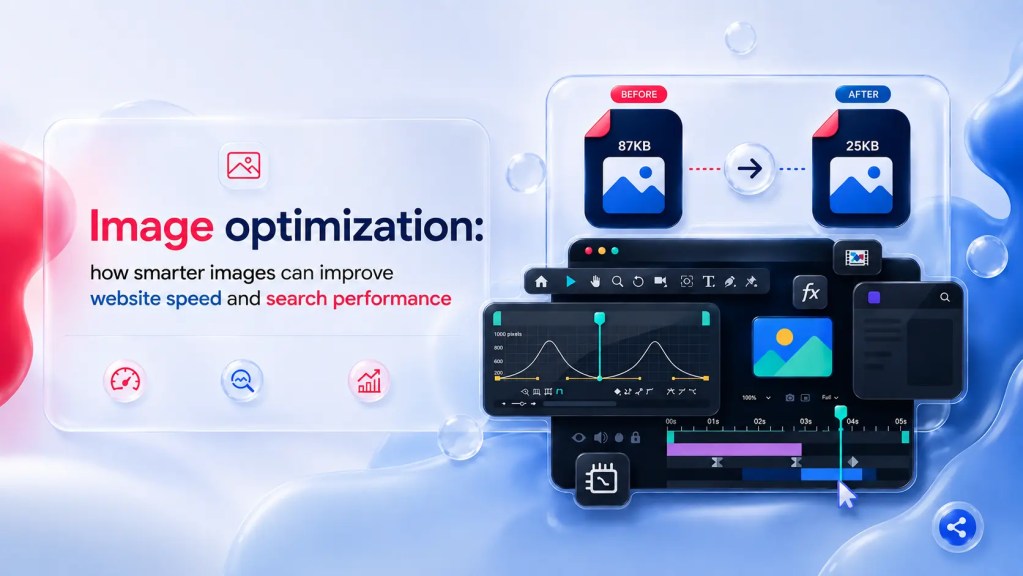
Image optimization makes website images lighter and faster without sacrificing the quality visitors need. Images often account for a large share of page weight, so small improvements can noticeably boost loading speed.
Faster image delivery improves browsing on mobile devices, slower connections, and visual pages. It can also reduce bandwidth and help important content appear sooner.
How do image file sizes affect website speed?
Large image files take longer to download. Several oversized photos can delay a page even when its layout and code are efficient, especially on mobile data or older devices.
The goal is not to make every file as small as possible. Images still need enough clarity for their purpose. A product photo may need more detail than an icon.
What image formats are best to use on websites?
There is an appropriate format for each specific scenario. For example, JPEG would be ideal for photos, while PNG could be great for cases that need transparency and clarity. Formats like WebP and AVIF will provide better compression without compromising visual quality.
Testing must be done to assess the suitability, compatibility, and compression of various formats rather than relying on a single type for everything.
Choose formats based on purpose
A hero photograph, a transparent logo, a screenshot, and an illustration have different requirements. Matching the format to the image type prevents unnecessary weight while preserving the appearance users expect.
Why do responsive images matter?
Responsive images let browsers choose suitable sizes for the visitor’s screen and layout. This prevents a small mobile display from downloading a file designed for desktop.
Appropriate dimensions reduce data transfer and speed up visual loading. They also support sharper images on high-density screens without forcing every visitor to download the largest version.
How can compression enhance the performance of images?
Compression reduces image data and reduces file size. Lossless compression maintains the original data, whereas lossy compression removes data to achieve greater compression. Either way is useful provided it is done wisely.
Examine the images once they have been compressed. If the text is fuzzy, the details are lost, and the color looks bad, the file is excessively compressed.
How should lazy loading be used with images?
Lazy loading delays images below the visible area until visitors scroll closer. This reduces initial page work, especially on long articles, product listings, galleries, and image-heavy pages.
Images visible immediately should usually load without delay. Lazy loading an important hero or primary content image can make a page feel slower because visitors wait for a visual that should already appear.
How does alt text fit into image optimization?
An alt tag helps to describe the purpose of meaningful images for people who access websites using screen readers. Alt text should describe why the image is there in the surrounding content, not simply repeat keywords.
In addition, search engines can gain a good understanding of what the visual is about from the surrounding content and other information related to the image.
How can image optimization benefit search performance?
Image optimization can be beneficial for SEO by improving page speed, mobile usability, and user experience. It is important to note that search performance depends on several factors, such as content quality, relevance, content structure, and others.
Image optimization can also improve search performance when images are used effectively alongside other factors, such as relevance and accessibility. Companies should work on providing useful images.
Frequently asked questions
At what intervals should businesses audit website images?
Audit your images when redesigning, migrating, conducting performance audits, or updating content.
Is it always necessary to compress an image before uploading?
Typically, yes. Compress images adequately without compromising on quality.
Do image dimensions influence performance?
Yes. The size of images should ideally match their displayed size.
Can too many images negatively impact a web page?
Yes. Too many images can add unnecessary page requests, consume bandwidth, and create visual noise.
Making website images faster and more useful
Optimizing images is most effective when done as an end-to-end process, not just as a single step like compressing an image.
Using suitable formats, proper sizes, appropriate dimensions, lazy loading, descriptive alt text, and constant testing ensures that websites display meaningful images without adding extra load to the page.
This ensures that the image quality remains consistent across various devices.
Build a faster visual experience
If your pages rely heavily on images and still feel slow, the issue may be file size, delivery, dimensions, or loading priorities.
Elatre can help review image optimization, website performance, and technical SEO so your visuals support a faster, clearer, and more search-friendly user experience.