Imagine a leaky pipe. You turn on the faucet, but only a trickle reaches the end. That’s what a flawed sales funnel is like. Potential customers enter at the top, but many need to convert into sales before drip away. Fortunately, you can build a sturdy sales funnel that captures a significant portion of potential customers and turns them into loyal fans—the secret lies in understanding the Sales Funnel Stages.
In this blog, we’ll explore the five essential stages of a sales funnel, explaining what happens at each step and how to optimize it for maximum conversions. Ultimately, you’ll have a clear roadmap to guide potential customers towards becoming paying customers seamlessly.
The 5 Sales Funnel Stages: A Customer Journey
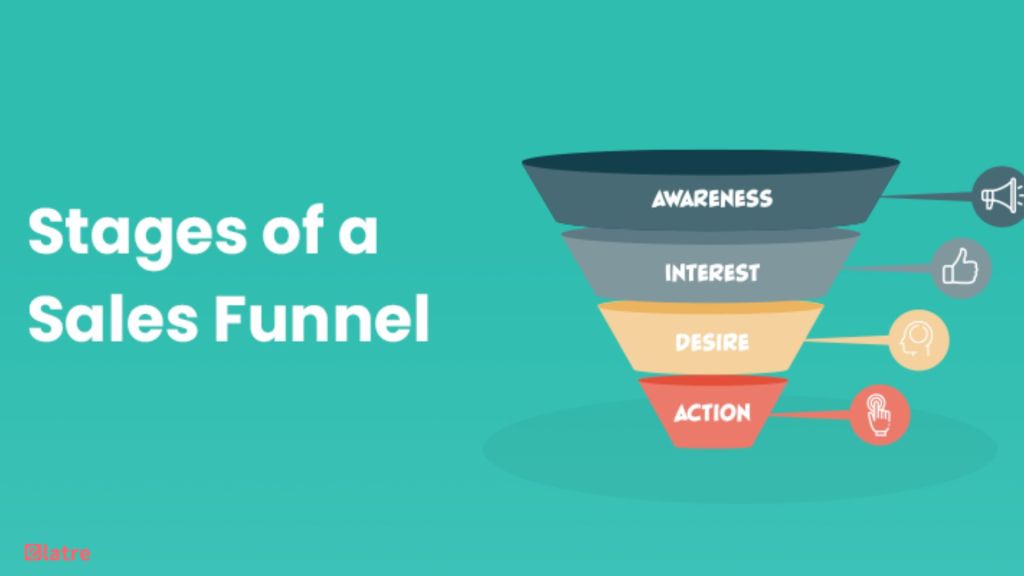
The sales funnel stages is a diagram outlining a potential consumer’s journey, from discovering your brand to buying from you. Here’s a breakdown of the five key stages:
Awareness: Introducing Yourself to the Game
The first stage concerns making potential customers aware of your brand and the problems you solve. You need to use a broad net to reach as many people as possible who are interested in your offer.

- Marketing Strategies:
- Using social media marketing, you may interact with your demographic on sites where they already spend time.
- Content marketing: Create informative blog posts, articles, or videos that address their pain points.
- Search engine optimization: This involves raising your website’s ranking in response to targeted search queries.
- Tips for Optimization:
- Put your energy into making informative and educational content rather than promotional stuff.
- Aim for a specific customer profile while crafting your message.
Interest: Sparking Their Curiosity
Prospective buyers are now interested in discovering more about your product or service because you have aroused their curiosity. Now, it’s time to nurture that curiosity and position yourself as the authority in your field.
- Marketing Strategies:
- Ebooks, white papers, and webinars: Offer in-depth content in exchange for contact information.
- Email marketing: Send targeted email sequences that educate and address their needs.
- Case studies and testimonials: Showcase the success stories of your existing customers.
- Tips for Optimization:
- Prospective customers are eager to learn more about your business or product after you pique their interest.
- Provide clear calls to action (CTAs), encouraging them to learn more.
Decision: Why You and Not Your Competitors?
Prospects are now actively considering solutions and comparing you to your competitors. This is your chance to shine and demonstrate why your offering fits best.
- Marketing Strategies:
- Customers can try out your goods for free with a demo or trial.
- Comparison charts and competitive analysis: Highlight your unique value proposition.
- Live chat support: Offer personalized assistance and answer their questions.
- Tips for Optimization:
- Provide a free trial or demo so clients may test out your products.
- Address potential objections head-on and showcase clear differentiators from your competitors.
Action: Sealing the Deal
This is where the magic happens – the conversion point where potential customers become paying customers. Make the buying process smooth and frictionless.
- Marketing Strategies:
- Limited-time offers and discounts: Encourage them to take action now.
- Clear and compelling CTAs: Make it easy for them to buy.
- Streamlined checkout process: Minimize any obstacles that might prevent a purchase.
- Tips for Optimization:
- To cater to your consumers’ demands, offer a range of payment ways.
- If a client has any issues or inquiries while checking out, you should provide them with first-rate customer service.
Retention: Building Long-Term Relationships
The sale isn’t the finish line; it’s the beginning of a long-term relationship focused on exceeding customer expectations and fostering loyalty.
- Marketing Strategies:
- Customer onboarding programs: Help them get the most value from your product or service.
- Loyalty programs: Reward repeat customers and incentivize further purchases.
- Engaging content and communication: Stay top-of-mind and continue to provide value.
- Tips for Optimization:
- Proactively address customer needs and concerns.
- If you want to improve your products and services, you should ask your customers for feedback.

How to Avoid the Most Frequent Sales Funnel Mistake
A well-defined sales funnel stages is crucial, but even the best plans can have flaws. Here are some common mistakes to watch out for:
- Strictly concentrating on the bottom: Neglecting awareness and interest stages can leave you with a small pool of qualified leads.
- Not tracking and analyzing funnel data: How can you optimize what you don’t measure? Rack critical metrics at each stage to identify areas for improvement.
- Having a more straightforward or lengthy checkout process: Cart abandonment and revenue loss can result from shopping cart friction.
By understanding these pitfalls, you can proactively avoid them and ensure your funnel flows smoothly.
Building Your Sales Funnel for Success
You can build a reliable system that turns prospects into buyers and cultivates lasting connections with customers by mastering and perfecting every step of the sales funnel stages.
Are you ready to explore how Elatre, a creative digital marketing agency, can help you craft a winning sales funnel strategy? From developing engaging content to applying data-driven optimization strategies, our team of specialists is here to help you every step of the way. I’ll help you attract, engage, and convert your target audience, turning them into loyal brand advocates.
Let Elatre be your partner in building a sales funnel that drives sustainable business growth. Contact us today for a free consultation!