
Email marketing is an effective method for reaching customers and increasing sales. With the right email marketing strategy, companies can nurture leads, build customer rapport, improve customer retention, and generate sales. Email marketing has the highest return on investment (ROI) of any marketing channel, making it an essential component of any marketing plan.
Identify and set your email marketing KPIs
Some common email marketing KPIs include: Before making your email marketing plan, finding and setting key performance indicators (KPIs) that match your business goals is essential. These key performance indicators (KPIs) will help you measure your campaigns’ performance and make decisions based on data to improve your plan. Open rate, click-through rate, conversion rate, unsubscribe rate, delivery rate, bounce rate, and forwards.
Select an email marketing planning template.
It’s helpful to use an email marketing planning template to stay organized and streamline your email marketing efforts. This template should include the email topic, task owners, project status, send dates, and target audience. You can use a regular spreadsheet or project management tool like Asana or Trello to create your planning template.
A clear plan ensures that your email campaigns are executed smoothly and that all team members are on the same page.

Identify your target audience
You should identify your target audience to create a successful email marketing campaign. Only some of the emails on your subscriber list will be useful to everyone, so it’s essential to divide your audience into groups based on location, lead status, past sales, demographics, survey or quiz results, website behavior, email engagement, and more.
Determine your email marketing schedule
While email marketing can be highly effective, bombarding your subscribers with emails can have the opposite effect. It’s essential to determine a suitable email marketing schedule that balances staying top-of-mind and not overwhelming your audience.
Consider factors such as the nature of your business, your target audience’s preferences, and the purpose of each email. Experiment with different schedules and A/B tests to determine the best timing for optimal results.
Write click-worthy subject lines
The subject line is the first thing recipients see in their inboxes, so crafting compelling and click-worthy subject lines is crucial. A good subject line entices recipients to open the email and sets the tone for the content.
Experiment with different subject line styles, such as posing questions, using numbers or emojis, and creating a sense of urgency or exclusivity. A/B test your subject lines to find out what your audience likes best and what gets more people to open your emails.
Make a design for your email marketing strategy
In addition to a catchy subject line, the style of your email is a vital part of getting people to pay attention and act on what you want them to do. Your email design should be on-brand, visually appealing, and easily read.
Consider using templates or email service providers like Mailchimp, HubSpot, or Constant Contact to create professional and visually appealing emails. Use colors, fonts, and imagery that align with your brand and make your content skimmable for easy consumption.

Include clear CTAs
Clear calls-to-action (CTAs) are essential in driving conversions through email marketing. After reading your email, your recipients should know exactly what action you want them to take. Whether purchasing, signing up for an event, or downloading a resource, your CTAs should be prominent and easy to follow.
Use persuasive language and design elements like buttons or hyperlinked text to draw attention to your CTAs. A well-designed CTA can significantly increase click-through rates and drive conversions.
A/B test your emails
You may learn a lot about improving your email marketing efforts using A/B testing. By A/B testing various aspects of your emails, such as subject lines, CTAs, graphics, and copy, you can learn what works well for your audience and make decisions based on hard facts.
When conducting A/B tests, change only one element at a time to accurately measure each variation’s impact. Use the insights from A/B testing to refine your emails and improve their performance.
Monitor your metrics
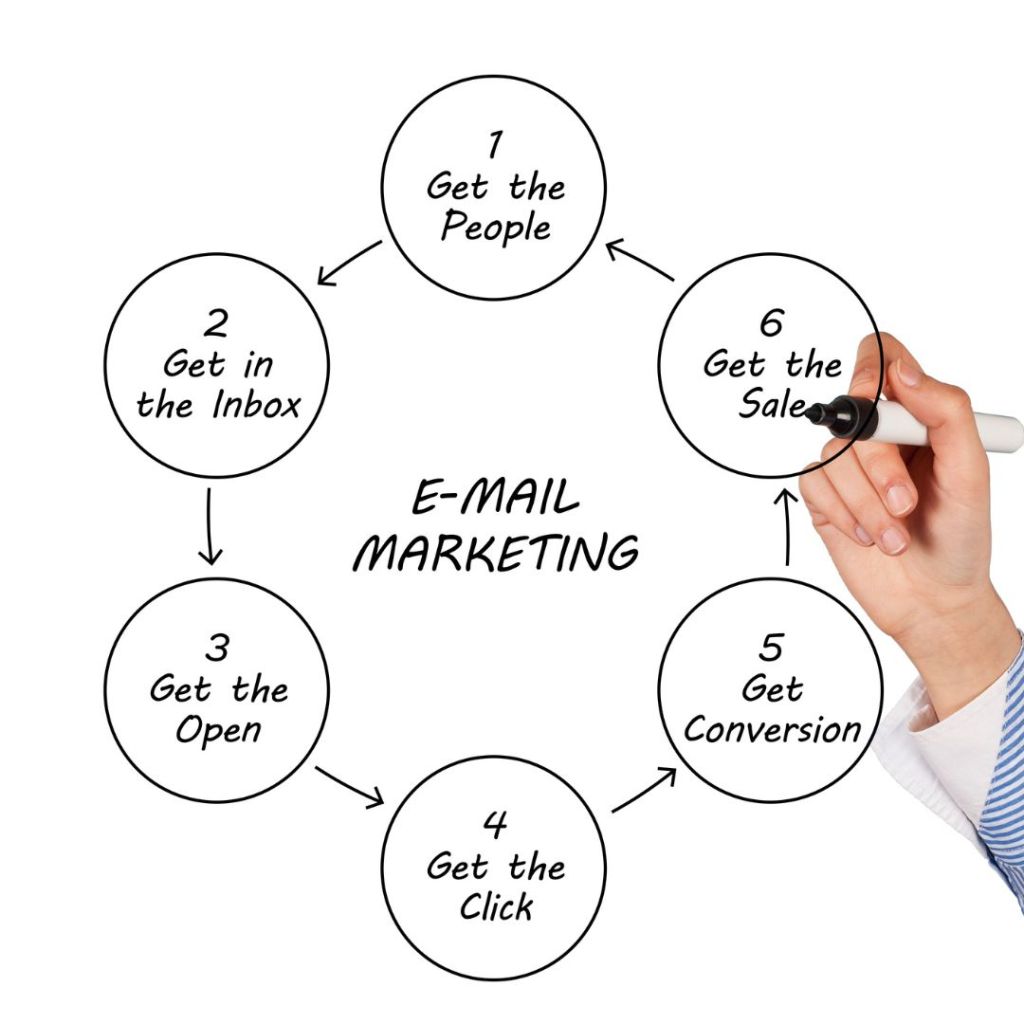
To gauge the success of email marketing strategy, it’s crucial to monitor your metrics consistently. Track key metrics such as open rates, CTR, conversion, and unsubscribe rates to understand your campaigns’ performance.
Regularly compare your measurements to your key performance indicators to spot patterns and optimize your performance. You may make decisions and fine-tune your email marketing plan with this data-driven method.
Stand out from the crowd
In a crowded inbox, making your emails stand out to capture recipients’ attention is essential. Find better ways to engage your audience and differentiate yourself from competitors. Consider using personalized content, storytelling, humor, or interactive elements to make your emails memorable.
Take inspiration from brands like The Hustle, which adds a fun spin to their email newsletters with quirky GIFs, casual writing, and a mix of bite-sized and in-depth content.
Use personalization
Personalization is a powerful strategy to make your emails more relevant and engaging. By leveraging customer data from your CRM, you can personalize subject lines, email copy, and even send birthday or anniversary messages. Personalization helps create a sense of individual attention and enhances the customer experience.
Automation tools and triggers can enable you to deliver personalized emails at scale. Experiment with different personalization tactics to see what resonates best with your audience.
Optimize for mobile
With the rise of mobile devices, ensuring your emails can be read on mobile devices is essential. More than 70% of people read their emails on mobile apps, so a responsive design is necessary to ensure a seamless user experience.
Use responsive email templates that adapt to screen sizes and keep your email copy brief and scannable. Optimize your images and ensure your design works well in light and dark mode. By catering to mobile users, you can reach an audience and maximize the effectiveness of your email marketing campaigns.

Frequently Asked Questions
What is email marketing?
Email marketing is a form of digital marketing in which a list of receivers receives promotional emails.
Why is email marketing important?
Email marketing is vital since it facilitates interaction with customers, the dissemination of information about goods and services, and generating sales.
What are some effective email marketing strategies?
Some effective email marketing strategies include segmenting your email list, personalizing emails, using compelling subject lines, optimizing for mobile devices, and tracking metrics to measure success.
How do I get more people to sign up for my email list?
You can improve your email subscriber list by offering valuable content, incentives, and promotions, using lead magnets, optimizing signup forms, and promoting your newsletter or email list on your website and social media channels.
What metrics should I use to assess the performance of my email marketing initiatives?
Key performance indicators (KPIs) such as open, click, conversion, bounce, and unsubscribe rates can help you evaluate the efficacy of your email marketing. These metrics can be used to assess the reach and engagement of your email marketing campaigns.
A well-executed email marketing strategy can significantly boost conversions and foster customer loyalty. You can create impactful email campaigns that drive results by identifying your goals, segmenting your audience, crafting compelling content, and monitoring your metrics. Stay current with industry best practices and experiment with new strategies to optimize your email marketing efforts.