
Imagine you’re embarking on a road trip. You know your destination (your business goals), but without a roadmap (marketing plan), you might get lost, take unnecessary detours, or run out of gas (budget). You can reach your target audience and propel your business forward with a well-planned marketing campaign. In this, we’ll break down the ten essential elements of a winning marketing plan, making navigating the exciting marketing world easy. Whether you’re an experienced business owner or just getting your feet wet, this book will teach you all you need to know to develop a winning strategy.
Define Your Marketing Goals
The foundation of any strong marketing plan is a set of clear, achievable goals. What do you want to accomplish with your marketing efforts? Here are some common marketing goals:
- Increase brand awareness: Get your brand name out there and establish yourself in the market.
- Generate leads: Attract potential customers interested in your products or services.
- Boost sales: Convert leads into paying customers and increase your revenue.
- Improve customer engagement: Get to know your current customers better.
Remember: SMART goals are Specific, Measurable, Achievable, Relevant, and Time-bound.
Know Your Target Audience
Your marketing message will resonate with some. Determining your ideal client profile (ICP) is essential to creating effective targeted advertising. Consider demographics, interests, pain points, and online behavior to understand who you’re trying to reach.
Some approaches to identifying your ideal customers are as follows:
- Market research: Conduct surveys, focus groups, or competitor analysis to gather insights.
- Customer data analysis: Analyze existing customer data to identify trends and commonalities.
- Buyer personas: To make your marketing more personalized, you can create fictional characters representing your ideal customer.
Conduct a Competitive Analysis
You need to know what your competitors are doing wrong to set your brand apart and develop a successful plan. Analyze their marketing channels, messaging, and value proposition to identify potential gaps you can exploit.
Here are some aspects to consider when analyzing your competitors:
- Products or services: What are they offering, and how does it compare to yours?
- Pricing strategy: How are they determining the prices of their goods and services?
- Marketing channels: Where are they promoting their business?
- Target audience: Tell me who they’re aiming to entice.
Develop Your Marketing Strategy
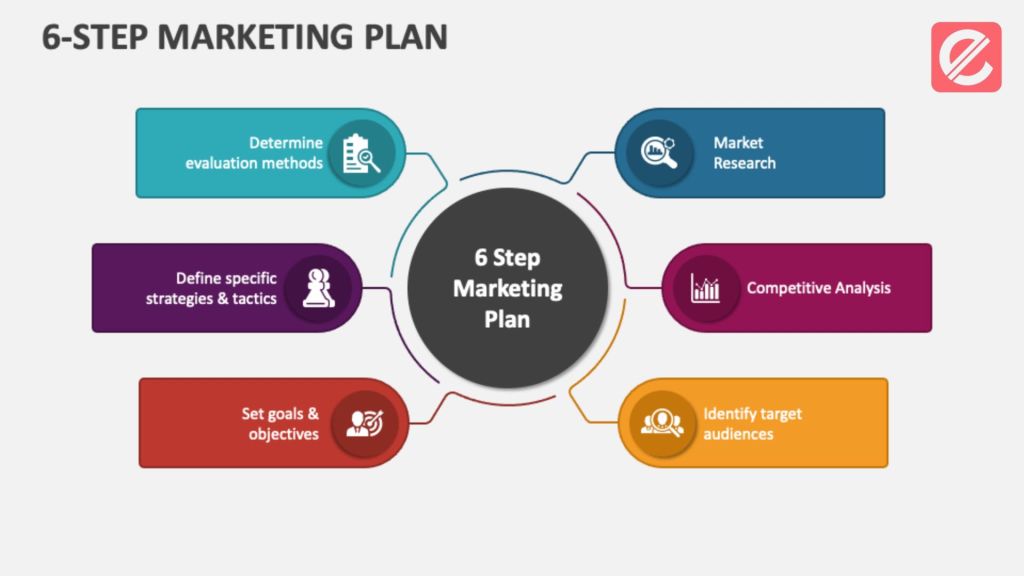
It is time to develop a plan to accomplish your objectives now that you have identified your audience. Here, you will see a detailed plan outlining all the steps you need to follow to reach your desired audience and accomplish your marketing objectives.
Some essential components of a marketing plan are as follows:
- Marketing channels: Decide whether you’ll use paid advertising, social media, email, or content marketing to reach your target demographic.
- Content calendar: To organize and arrange your marketing material for several platforms, make a content calendar.
- Budget allocation: Determine the expected return on investment (ROI) for each marketing channel before allocating funds to them.
Identify Your Marketing Mix
The marketing mix, also known as the 4Ps of marketing, refers to the four key elements that influence your marketing plan:
- Product: What are you offering to your target audience? How does your product or service solve their problems or fulfill their needs?
- Price: Tell me the price of your service or product. Consider your target audience’s pricing expectations and production costs.
- Place: Where will you sell your product or service? This could be online, through brick-and-mortar stores, or a combination.
- Promotion: What strategies would you employ to attract potential customers and showcase your product? Your marketing channels will be helpful in this situation.
Create Compelling Content
Content is king in today’s marketing landscape. To reach your intended audience, you must produce exciting and informative material.
Here are some content marketing ideas:
- Blog posts: Share valuable insights, industry trends, and helpful tips related to your niche.
- Infographics: Visually represent complex data in an easy-to-understand format.
- Videos: Create engaging explainer videos or product demonstrations.
- Social media posts: Share bite-sized content that sparks conversations and builds brand awareness.
Utilize Effective Email Marketing
Email marketing remains a powerful marketing tool. Creating an email list enables you to cultivate leads, advertise your offerings, and forge deeper customer connections.
Here are some critical aspects of effective email marketing:
- Build a targeted email list: Offer free, valuable resources like whitepapers and ebooks to encourage people to join your email list.
- Segment your email list: Send personalized emails to distinct subsets of your audience by considering their interests and requirements.
- Personalize your emails: Use subscriber names and personalize your content to avoid sounding generic.
- Craft compelling subject lines: Make sure your email subject lines are attention-grabbing and straightforward to open.
- Track your results: To gauge the efficacy of your efforts, keep an eye on your open email, click-through, and conversion rates.

Leverage the Power of Social Media
You can reach your demographic, raise your brand’s profile, and encourage participation using social media.
Here are some tips for leveraging social media effectively:
- Choose the right platforms: Determine which social media platforms your target audience uses.
- Develop a social media content calendar: Make a plan and stick to it for posting interesting material that represents your business and speaks to your target demographic.
- Run social media contests and giveaways: Attract new fans and promote your content interestingly with interactive promos.
- Respond to comments and messages: Foster two-way communication and build relationships with your audience.
- Utilize social media analytics: Keep tabs on how well your social media campaigns are doing and adjust your approach accordingly.
Track and Analyze Your Results
Advertising never ends. You must monitor and evaluate your outcomes to know what’s working and what isn’t.
Here are some key metrics to track:
- Website traffic: By tracking your website’s traffic, you can see how many people visit it and where they are coming from.
- Lead generation: Count the leads that your marketing efforts produce.
- Conversion rates: Find out what proportion of site visitors do what you want them to—for example, buy something or join your email list.
- Social media engagement: Measuring the involvement on social media includes keeping tabs on likes, comments, and shares.
- ROI (Return on Investment): Analyze the return on investment for your marketing campaigns to assess their effectiveness.
Look at these KPIs to see how you can improve your marketing plan and maximize your investment.
Embrace Continuous Improvement
The marketing landscape is constantly evolving. New trends emerge, and consumer behavior changes. Therefore, it’s essential to embrace continuous improvement in your marketing efforts.
Some suggestions for how to refine your advertising strategy over time are:
- Stay up-to-date with marketing trends: Read industry publications, attend marketing conferences, and participate in online communities to stay informed about the latest trends.
- A/B test your marketing campaigns: Test different marketing materials and messaging versions to see what resonates best with your audience.
- Seek feedback from your audience: Poll or survey your intended audience to gather their thoughts. Their feedback can help you fine-tune your advertising strategy.

The Road to Marketing Success: A Recap and Call to Action
By incorporating these ten essential elements into your marketing plan, you’ll be well on your way to achieving your marketing goals. If you want your marketing strategy to be effective, remember that it is an ongoing process that requires constant attention.
Ready to take your marketing to the next level? Find no better digital marketing agency than Elatre to assist you in developing and executing a winning plan. You and our professional marketers will determine your current and future requirements for reaching your specific business objectives. Contact Elatre today to explore how we can help your business thrive!