
Imagine navigating a dense jungle without a map or compass. You might stumble upon hidden treasures, but the chances of getting lost are high. Many businesses resemble this when it comes to Artificial Intelligence (AI). They see its immense potential but need a clear strategy to harness it effectively. In today’s data-driven world, an AI Strategy is no longer a luxury; it’s a necessity. It acts as your roadmap, guiding you towards using AI to achieve specific business goals. You can use the information in this blog post to make a successful AI plan and tap into the power of growth and innovation.
What is an AI Strategy?
An AI strategy is a well-defined plan that outlines how your organization will leverage AI capabilities to achieve its long-term objectives. It goes beyond simply deploying AI tools and delves into the “why” and “how” of AI integration.
Here’s a breakdown of the critical components of a successful AI strategy:
- Business Goals: Your plan will only be complete by ensuring that all AI projects contribute to achieving company objectives. Are you aiming to improve customer service, streamline operations, or gain a competitive edge? Clearly defining these goals will guide your AI project selection.
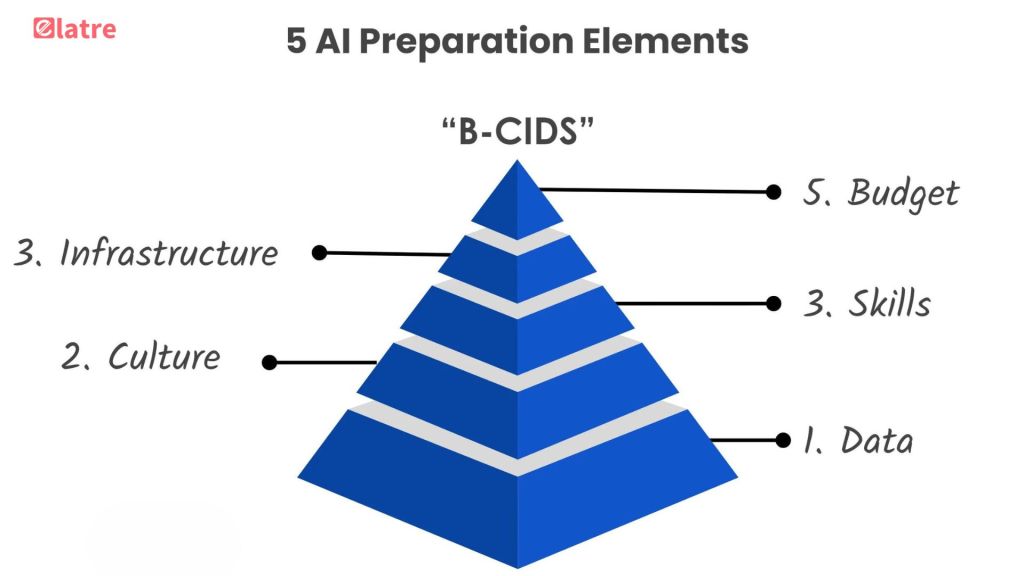
- Data Foundation: AI thrives on data. Your strategy should address how you will collect, store, and manage the data necessary to train and run your AI models.

- Talent and Skills: AI implementation requires a skilled workforce. Your strategy should address any skill gaps and outline plans for training or hiring AI specialists.
- Ethical Considerations: AI raises ethical questions surrounding bias and transparency. Your strategy should integrate ethical considerations into developing and deploying AI solutions.
Why Do You Need an AI Strategy?
Here are some compelling reasons why an AI strategy is crucial for your business:
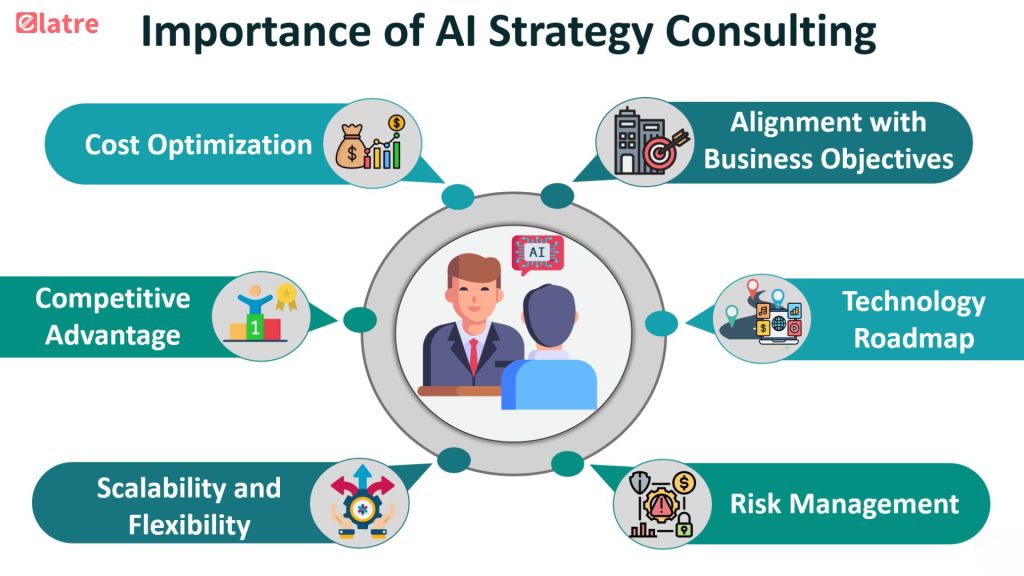
- Focus and Prioritization: An AI strategy can help you go through the many AI solutions and zero in on the ones that will significantly influence your company’s objectives.
- Return on Investment (ROI): A well-defined strategy ensures your AI investments are targeted and yield measurable results.
- Reduced Risks: Your strategy minimizes risks associated with AI implementation by addressing ethical considerations and potential biases upfront.
- Sustainable Development: A sound strategy sets the stage for continuous learning and improvement of your AI models, fostering long-term success.
Developing a Winning AI Strategy: A Step-by-Step Guide
Building a winning AI strategy requires careful planning and execution. Here’s a step-by-step guide to get you started:
1. Assess Your Current State:
- Business Goals: Identify your key business objectives and challenges.
- Data Capabilities: Evaluate your current data infrastructure and identify any gaps in data collection, storage, or accessibility.
- Current AI Usage: Assess any existing AI initiatives and their effectiveness.
2. Define Your AI Goals:
- Align with Business Objectives: Ensure your AI goals directly contribute to achieving your broader business objectives.
- Focus on Specific Outcomes: Define measurable outcomes you expect from your AI initiatives.
3. Identify AI Use Cases:
- Research AI Applications: Explore various AI solutions relevant to your industry and goals.
- Prioritize Use Cases: Evaluate the potential impact and feasibility of different AI applications and prioritize the ones with the highest return on investment.
4. Prepare Your Data Foundation:
- Data Collection: Determine the data required for your chosen AI use cases and establish processes for efficient data collection.
- Data Quality: Implement data governance practices to ensure accuracy, completeness, and security.
5. Build and Implement Your AI Solution:
- Select Appropriate Methods and Equipment: Select AI tools and technologies that fit your specific needs and budget.
- Develop or Partner: Decide whether to build your AI solution in-house or collaborate with an AI development partner.
6. Monitor and Evaluate:
- Track Performance: Monitor your AI models’ performance and adjust them as needed.
- Measure Results: Check in regularly to see how your AI projects reach your goals.
Challenges of Implementing an AI Strategy
While AI offers tremendous benefits, implementing an AI strategy comes with its own set of challenges. Here are some key obstacles to consider:
- Data Challenges: Obtaining high-quality, unbiased data is crucial for effective AI models. However, data collection, storage, and management can be complex and expensive.
- Talent Acquisition and Development: Finding and retaining skilled AI professionals can be challenging. To ensure their employees have the skills employers require, businesses should consider funding training programs.
- Integration with Existing Systems: Integrating AI solutions with preexisting IT infrastructure sometimes takes a lot of technical know-how and effort.
- Change Management: Implementing AI can lead to changes in workflows and processes. To guarantee employee buy-in and adoption, change management tactics need to be effective.
The Future of AI Strategy
The field of AI is constantly evolving, with new advancements emerging rapidly. Here’s a glimpse into what the future holds for AI strategy:
- Explainable AI (XAI): As AI models become more complex, there’s a growing need for explainability and transparency. XAI techniques will help users understand how AI models make decisions, fostering trust and ethical adoption.
- Democratization of AI: Businesses of all sizes may now take advantage of AI since solutions are becoming more straightforward and affordable. Cloud-based AI platforms and low-code development tools will further democratize AI adoption.
- Focus on Business Value: The focus will shift from simply deploying AI to deriving tangible business value from AI initiatives. Businesses will prioritize AI projects that deliver a clear return on investment and drive strategic objectives.
AI holds immense potential to transform businesses across industries. However, more than simply adopting AI is required. A well-crafted AI strategy is essential to unlock its true power and drive sustainable growth.
By following the steps outlined above and focusing on clear goals, data preparedness, and ethical considerations, you can develop a winning AI strategy that propels your business toward a future of innovation and success.
Are you prepared to learn more about how Elatre, an innovative digital marketing shop, can assist you in creating and executing a successful AI strategy? From determining what you hope to achieve using AI to deciding how to measure your progress, our team of specialists is here to help. We combine cutting-edge AI technology with our deep digital marketing expertise to create customized solutions that deliver tangible results.
Contact Elatre today and unlock the power of AI for your business!