
Imagine you’re setting off on a road trip. You’ve got a shiny new car packed with gear, a vague sense of adventure, and… no map. Sure, it might be a fun ride, but eventually, you’ll get lost. The same goes for content marketing. Without a clear direction (your business goals) and a roadmap (your content plan), you’ll wander online, failing to connect with your target audience. In this, we’ll equip you with the tools you need to craft a content plan that propels your business forward. We’ll simplify the procedure into manageable phases so that your content marketing journey is maintained.
Content Plan: The GPS of Your Content Marketing Journey
Think of your content plan as the GPS guiding your content marketing efforts. It outlines your specific destinations (content types) to reach your desired outcome (business goals). You create a cohesive strategy that resonates with your audience and fuels business growth by aligning these two elements.
Step 1: Know Your Destination – Defining Your Business Goals
Before diving headfirst into content creation, take a step back and identify your overarching business goals. With your content marketing efforts, what goals do you hope to accomplish? Here are some common goals to consider:
- Increase brand awareness: Expand your brand’s reach and position yourself as a thought leader.
- Generate leads: Attract potential customers interested in your products or services.
- Boost website traffic: Increasing traffic can improve conversion rates and brand recognition.
- Improve customer engagement: Foster deeper relationships with your existing customer base.
- Drive sales: Convert website traffic into paying customers.
Once you’ve identified your primary goals, translate them into SMART goals. SMART goals are:
- Be specific. Clearly state your goals. Instead of “increase brand awareness,” the goal is to “achieve a 20% increase in website traffic within the next quarter.”
- Measurable: Establish metrics to track your progress. How will you know if you’re achieving your goals? Define key performance indicators (KPIs) such as website traffic, lead generation, or social media engagement.
- Attainable: Set realistic goals that are achievable with the resources at your disposal.

- Relevant: Make sure your objectives line up with your overarching corporate goals.
- Time-bound: Decide on a deadline for accomplishing your objectives.
A clear road map for your content marketing journey is provided by setting SMART goals.
Step 2: Understanding Your Audience – Who Are You Talking To?
Now that you know your destination, it’s time to identify who you’ll be traveling with – your target audience. Understanding their needs, interests, and pain points is crucial for creating resonating content. Here are a few strategies to learn more about your audience:
- Market research: To gauge your target market, hold focus groups, polls, or surveys.
- Website analytics: Analyze website traffic data to understand your visitors’ demographics, interests, and content preferences.
- Social media listening: Monitor your target audience’s chats to discover what issues and subjects they discuss.
- Competitor analysis: Research the content your competitors are creating and their target audience.
By developing a buyer persona—a detailed profile of your ideal customer—you clearly understand who you’re creating content for. This guarantees that your material directly addresses their needs and difficulties.
Step 3: Charting Your Course – Content Types and Formats
With your destination and travel companions in mind, it’s time to decide on the specific content formats (your vehicles) that will get you there. Here are some popular content types to consider:
- Blog posts: Educational articles covering market trends, customer service issues, and new offerings.
- Infographics: Visually appealing representations of complex data that are easy to understand and share.
- Ebooks: Comprehensive guides that delve deeper into specific topics, often used to generate leads.
- Videos: Engaging video content can showcase your brand personality, educate your audience, or tell compelling stories.
- Webinars: Online events, either live or recorded, that let you talk with your audience in person and provide them with detailed information.
- Social media posts: Short, snappy updates that keep your audience engaged and informed.
The best content formats will depend on your audience’s preferences, your business goals, and your available resources.
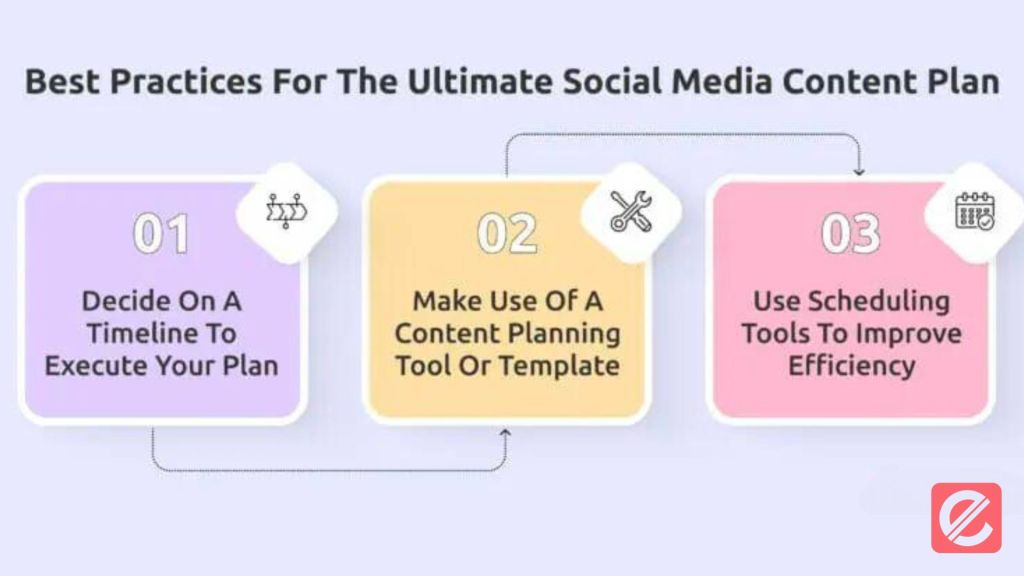
Step 4: Fueling Your Journey – Content Calendar and Workflow
Establishing a regular content plan calendar and workflow is essential to maintaining the efficiency of your content marketing engine once you’ve selected your content formats. Here’s what you need to consider:
- Content calendar: Map out your content creation process in advance. This includes brainstorming topic ideas, assigning deadlines, and scheduling publishing dates.
- Content creation workflow: Establish a straightforward process for creating, editing, and publishing your content. This might involve collaboration between writers, designers, and editors.
- Content repurposing: Don’t start from scratch! Look and explore ways to transform already-existing content into new forms. A blog piece, for instance, can be turned into a social media series or an infographic.
Establishing a structure for producing and disseminating content guarantees a consistent stream of excellent material that maintains audience interest.
Step 5: Reaching Your Destination – Content Distribution and Promotion
Your unique content won’t do much good if no one sees it. Here are some strategies to get your content in front of your target audience:
- Search Engine Optimization (SEO): Optimize your content for relevant keywords to improve organic search visibility.
- Social media promotion: Distribute your content on social media platforms frequented by members of your intended audience.
- Email marketing: Send email newsletters to your subscriber base promoting your content.
- Paid advertising: Consider sponsored ad options on social media and search engines to reach more people.
By implementing a multi-pronged distribution strategy, you increase the chances of your content reaching the right people at the right time.
Step 6: Course Correction – Measurement and Analytics
Content marketing is a process rather than a final goal. It’s critical to monitor your development and make changes as you go. Here’s why measurement and analytics are crucial:
- Understanding what works: Examine information from lead generation, social media interaction, and website traffic to determine what kind of content appeals to your target market.

- Identifying areas for improvement: Use data insights to identify content gaps or formats that aren’t performing well.
- Optimizing your strategy: Based on your data, refine your content strategy to achieve better results.
By continuously measuring and analyzing your content performance, you can ensure your content marketing efforts drive actual business results.
Aligning Your Content Plan with Business Goals – A Recipe for Success
These steps help you establish a content plan supporting your business objectives. Remember, successful content marketing is about more than creating great content. It’s about understanding your audience, crafting a strategic roadmap, and continuously measuring your progress.
Ready to take the wheel and steer your content marketing efforts in the right direction? Elatre, a creative digital marketing agency, can help. From planning to creating to promoting, we cover everything in our content marketing services. Explore our services today, and let us help you achieve your content marketing goals!