Envision entering a clothes shop where everything is arranged haphazardly on racks within reach. Jeans are mixed with evening gowns, athletic wear mingles with business attire, and sizes are all jumbled up. Finding what you need is a frustrating nightmare. That’s what happens when you market to a general audience without Segmentation. You throw everything at the wall and hope something sticks. But in today’s competitive landscape, that approach could be more practical. This is where customer segmentation comes in. It’s dividing your customer base into distinct groups based on shared characteristics. By understanding these segments, you can customize your marketing messages, products, and overall strategy to resonate more deeply with each group. In short, customer segmentation is the key to unlocking a more targeted and effective marketing approach.
What is Customer Segmentation?
Customer segmentation divides your existing and potential customers into distinct groups with similar characteristics. These characteristics can be based on a variety of factors, including:
- Demographics: Age, gender, income, location, education level, etc.
- Needs and Behaviors: What problems are they trying to solve? How do they typically interact with your brand (website visits, social media engagement, purchase history)?
- Psychographics: Values, interests, lifestyles, and personality traits
- Firmographics (B2B): Company size, industry, revenue, and location (for Business-to-Business marketing)
Segmenting your customers lets you gain valuable insights into their preferences and buying journeys. This will enable you to design marketing strategies primarily focused on their needs and areas of concern.
Why is Customer Segmentation Important for Marketing?
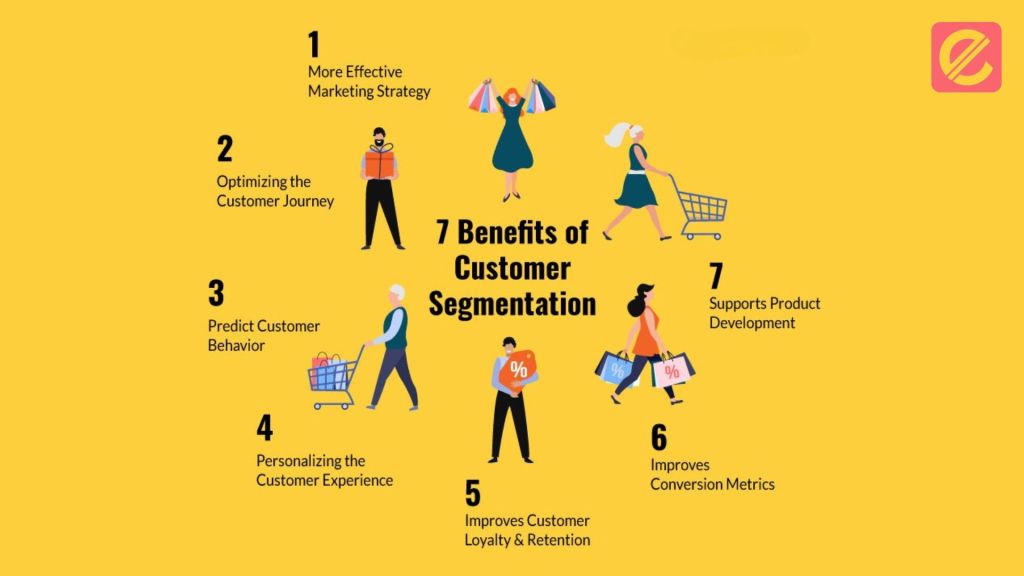
There are several compelling reasons why customer segmentation is crucial for any successful marketing strategy:
Increased Marketing ROI
Targeted marketing campaigns are more effective. When you segment your audience, you can customize your channels and messaging to appeal to each category. This eliminates wasted ad spend and ensures you’re reaching the right people with the right message at the right time. The result is a higher return on investment (ROI) for your marketing efforts.

Improved Customer Engagement
Generic marketing messages often need to be revised. People are bombarded with daily advertising, making them more likely to tune out irrelevant messages. Segmenting your audience allows you to better meet the needs and interests of each subset through targeted marketing and content creation—this tailored strategy results in higher engagement and a more favorable view of the brand.
Enhanced Customer Lifetime Value (CLTV)
Customer lifetime value (CLTV) refers to the total revenue a customer generates for your business over their relationship with you. Using Segmentation, you may determine which of your clients are the most valuable and adjust your marketing strategy to foster their steadfastness and promote recurring business. For example, you might offer exclusive discounts or loyalty programs to high-value customers.
More Effective Product Development
Understanding your customer segments can inform your product development strategy. By examining each group’s requirements and inclinations, you can spot opportunities to create new features or solutions that target particular markets. This ensures that your products solve real problems for real people.
Streamlined Sales and Customer Service
Segmentation benefits your sales and customer service teams as well. By understanding the characteristics and buying behaviors of different segments, your sales reps can tailor their approach to each customer interaction. Similarly, your customer service team can anticipate issues and provide more efficient support based on each segment’s needs.
Examples of Customer Segmentation Strategies
There are many different ways to segment your customer base. Here are a few common examples:
- Demographic Segmentation: Targeting customers based on age, gender, income, location, etc. For example, a clothing company might segment its audience by age group and offer different styles and promotions for teenagers, young adults, and professionals.
- Behavioral Segmentation: Putting clients into groups according to their interaction with your brand, previous purchases, and online behavior. An online retailer may use purchase data to divide its customer base and make product recommendations.
- Needs-Based Segmentation: Categorizing customers based on their specific needs and problems. A software company might segment its audience by challenges and offer solutions tailored to those needs.
- Value-Based Segmentation: Grouping customers based on the amount of revenue they generate or their potential lifetime value. As a result, you can prioritize reaching valuable target segments with your marketing campaigns.
Getting Started with Customer Segmentation
Now that you know how vital consumer segmentation is, how do you begin? Here are a few key steps:
- Identify your data sources: Loyalty programs, social media engagement, and customer surveys. The more data you have, the more precise your Segmentation can be.
- Define your segmentation goals: What do you hope to achieve with Segmentation? Is more customer involvement, more revenue, or new product development the aim? Clear goals will direct your segmentation approach.
- Choose your segmentation criteria: Select the factors most relevant to your marketing objectives. Consider demographics, behaviors, needs, psychographics, or a combination.
- Analyze your data: Use your data sources to find patterns and trends in your consumer base. Data analysis tools can help you uncover hidden insights and segment your audience effectively.
- Develop targeted marketing campaigns: Make offers, content, and messaging for each market sector. Use the appropriate channels to reach each group, such as email marketing, social media advertising, or targeted content on your website.
- Measure and refine: Monitor the results of your segmented marketing initiatives. Analyze which segments are most responsive and adjust your strategy accordingly. Segmentation is ongoing, so be prepared to refine your approach over time.
Reap the Rewards: The Power of Customer Segmentation in Marketing

One effective tactic that can completely change your marketing plan is customer segmentation. By taking the time to understand your audience and segment them into distinct groups, you can create targeted campaigns that resonate with each customer’s needs and preferences. The result? Increased engagement, higher ROI, and a more loyal customer base.
Ready to take your marketing to the next level with customer segmentation? Elatre can help. Our team of experienced digital marketing specialists can assist you with every step of the process, from data analysis and Segmentation to developing targeted campaigns that drive results. Contact Elatre today to explore how customer segmentation can help you achieve your marketing goals!