
Imagine entering your favorite store, selecting an item you’ve been eyeing, and receiving a personalized discount at checkout. Picture getting home and finding the store’s app suggesting complementary products or receiving a follow-up email to ensure you’re satisfied with your purchase. This smooth, connected experience is the essence of omnichannel marketing. In this strategy, every interaction with a brand, online or offline, feels tailored to you.
What is Omnichannel Marketing?

Providing a unified and consistent customer experience across all channels is the goal of omnichannel marketing. Consumer interactions with your brand should be smooth, integrated, and customized whether they take place on your website, in-store, over email, or on social media. Creating a seamless journey where each touchpoint strengthens the relationship is the aim.
Critical Components of Omnichannel Marketing
- Customer-Centric Approach
- Omnichannel marketing revolves around understanding and prioritizing the customer’s journey. Customers feel valued and understood by recognizing each stage of the journey and delivering personalized experiences.
- This approach fosters stronger connections, driving long-term loyalty.
- Integrated Technology
- Technology is essential for connecting all customer touchpoints. Brands are able to follow client behavior comprehensively thanks to tools like client Relationship Management (CRM) systems, which assist in integrating data across platforms.
- Integrated technology ensures consistent messaging and relevant information across all channels.
- Data-Driven Decisions
- Data is the backbone of omnichannel marketing. Acquiring and evaluating information from many origins offers profound understanding of consumer conduct, facilitating accurate targeting and customization.
- Continuous data analysis helps refine marketing efforts, aligning them with customer expectations.
Benefits of Omnichannel Marketing

- Enhanced Customer Experience
- Omnichannel marketing creates a cohesive, personalized customer experience across all touchpoints. This seamless journey ensures consistent messaging and service, increasing customer satisfaction.
- Increased Revenue
- A consistent experience across channels drives higher conversion rates and increases customer lifetime value. Customers engaged through multiple channels are more likely to purchase and spend more.
- Better Data Collection
- Comprehensive data collection from various touch points provides a complete picture of customer interactions. This helps refine marketing strategies, improving targeting and segmentation efforts.
Steps to Implement Omnichannel Marketing
- Map the Customer Journey
- Make a map of the customer journey to see how customers interact with your business on different platforms. Identify key touchpoints and optimize each stage for a seamless experience.
- Integrate All Channels
- Ensure that all online and offline channels are connected to provide a unified experience. Use technology to centralize data and communications, ensuring consistency across all channels.
- Personalize Content
- Personalization is critical to effective omnichannel marketing. Use data to tailor messages, offers, and content to individual customers, enhancing the overall experience and increasing engagement.
- Measure and Optimize
- Continuously measure the performance of your omnichannel strategy. Track key metrics to assess what’s working and what needs improvement. Optimize based on customer behavior and preferences.
Common Challenges in Omnichannel Marketing
- Data Integration
- Integrating information from several sources can be challenging. Invest in CRM systems that consolidate data, providing a comprehensive view of customer interactions.
- Consistent Messaging
- Maintaining consistent messaging across platforms requires clear brand guidelines and regular team communication.
- Resource Allocation
- Omnichannel marketing can be resource-intensive. Prioritize channels based on their impact and gradually expand your strategy as resources allow.
Omnichannel Marketing vs. Multichannel Marketing
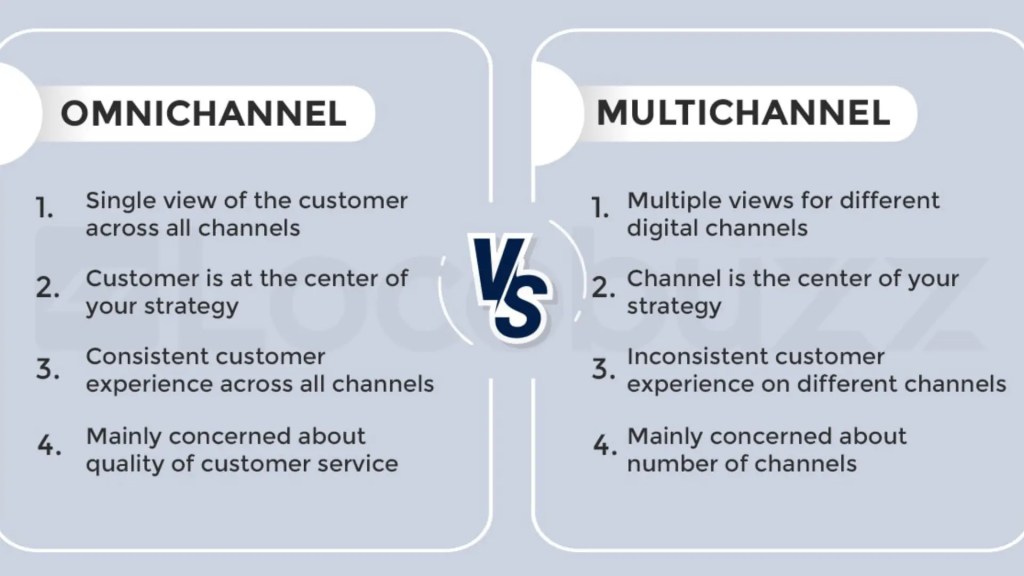
- Customer Experience
- Omnichannel marketing creates a seamless, connected experience across channels, unlike multichannel marketing, which can be fragmented.
- Data Synchronization
- Omnichannel marketing integrates data across channels, offering a complete customer view, unlike multichannel marketing, which often has siloed data.
- Personalization
- Omnichannel marketing leverages integrated data for personalized messaging, whereas multichannel marketing uses more generic messaging.
Future Trends in Omnichannel Marketing
- AI and Machine Learning
- Artificial intelligence (AI) and machine learning are becoming more and more crucial in omnichannel marketing since they automate customisation and aid in predicting consumer behavior.
- Voice Search and Smart Devices
- Brands are necessary because voice search and smart device usage are increasing. to optimize content for these touchpoints and integrate them into their strategies.
- Augmented Reality (AR)
- AR is becoming a powerful tool in omnichannel marketing, offering interactive, immersive experiences that enhance customer engagement.
Omnichannel marketing focuses on creating a unified, seamless customer experience across all touchpoints. By prioritizing the customer journey, integrating technology, and using data-driven decisions, brands can deliver personalized content that keeps customers engaged and loyal. As you refine your strategy, you’ll build stronger customer relationships, increasing satisfaction, loyalty, and revenue.