
Imagine walking into a crowded room, but instead of everyone milling about, they’re clustered around different stations, each offering a unique variation of the same dish. As you stroll about, you try out some daring new spice blends here and tart sauces there, assembling the ideal concoction to entice your palate. That’s the essence of multivariate testing (MVT) for website optimization. It’s not about presenting a single new recipe (A/B testing) but an array of elements, allowing visitors to create their ideal user experience – ultimately driving conversions. In this comprehensive guide, we’ll delve into the world of MVT, unpacking its intricacies and equipping you to leverage its power for website optimization.
What is Multivariate Testing?
Multivariate testing (MVT) is a powerful website optimization technique that analyzes the impact of multiple variations of website elements. Unlike A/B testing, which pits two versions of a page against each other, MVT explores a broader range of possibilities, presenting visitors with various combinations of elements like headlines, call-to-action buttons, images, and layouts.
Here’s a simplified breakdown:
- A/B testing: Tests two variations (A and B) of a single element to see which performs better.
- Multivariate testing: Tests multiple variations of several elements, analyzing all possible combinations to identify the most effective overall combination.
Why Use Multivariate Testing?
One excellent method for determining the effects of particular modifications is A/B testing. However, MVT offers several advantages when website optimization demands a more nuanced approach:
- Deeper Insights: By analyzing combinations of elements, MVT reveals how different factors interact and influence user behavior. This can be especially helpful in comprehending how design and content interact.
- Uncover Unexpected Champions: Sometimes, seemingly minor tweaks can significantly impact. MVT helps identify these hidden gems that might go unnoticed in A/B testing.
- Test More Complex Changes: MVT allows you to explore bolder revisions, like completely revamping your homepage layout, while still pinpointing the most effective elements.
How Does Multivariate Testing Work?
MVT can seem complex initially, but the underlying process is quite logical. Here’s a step-by-step breakdown:
1. Define Your Goals:
Start by determining what success looks like. Are you aiming to increase sign-ups, boost product sales, or improve user engagement? Clearly defined goals will guide your testing strategy.
2. Identify Testable Elements: Select the website elements you suspect might influence your goals. This could be your headline, call to action button (CTA) text, color scheme, image selection, or even the order in which information is presented.
3. Create Variations: Develop different versions of each chosen element. Aim for a balance – enough variation to glean insights, but not so many that the testing process becomes unwieldy.
4. Design the Test: Multivariate testing software helps create page combinations based on your chosen variations.
5. Launch the Test: Split your website traffic and serve the different page combinations to your visitors. Ensure you have sufficient traffic volume to gather statistically significant data.
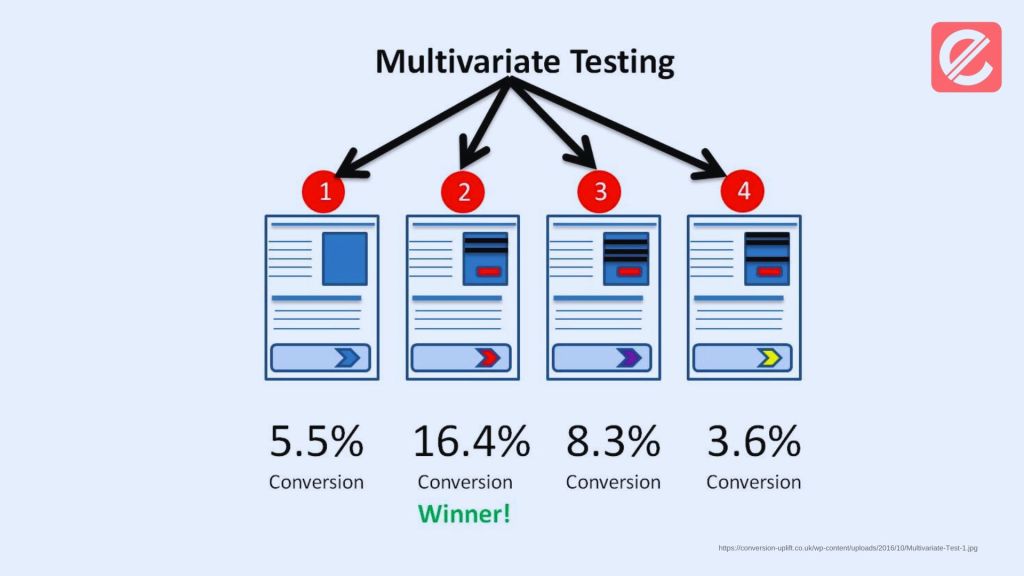
6. Analyze and Optimize: Track user behavior and conversions to see which combination performs best. Analyze the data to understand how different elements interact and influence user choices.
7. Implement Changes: Based on your findings, implement the winning combination of elements on your website. MVT is an iterative process, so use the learnings to refine future tests and continuously optimize your website.
MVT Best Practices for Success
While MVT offers tremendous potential, following these best practices ensures you extract the most value:
- Start Small: Try to test only a few elements at a time. Begin with a manageable set of variables to avoid overwhelming your audience and complicating data analysis.
- Prioritize High-Impact Elements: Focus on aspects with the highest likelihood of influencing user behavior, such as headlines, CTAs, and product descriptions.
- Set Clear Hypotheses: Before launching the test, clearly define what you expect to learn from each variation. This will guide your analysis and interpretation of the results.
- Statistical Significance is Key: Don’t make decisions based on slight fluctuations in data. To get trustworthy results, make sure your sample size is statistically significant.
- Consider User Experience: While optimizing conversions is important, prioritize user experience. Ensure all test variations offer a cohesive and positive experience for your visitors.
Overcoming Common Challenges in Multivariate Testing
Following this H2, you can delve into some of the roadblocks users might encounter with MVT and offer solutions to navigate them effectively. Here are some potential challenges to explore:
- Traffic Limitations: Briefly discuss how limited website traffic can impact the effectiveness of MVT and suggest strategies to address it, such as extending the testing period or targeting specific visitor segments.
- Data Analysis Complexity: Acknowledge that analyzing MVT data can be intricate. Offer solutions like using precise data visualization tools or partnering with a data analyst to ensure you extract the most valuable insights.
- Statistical Significance: Explain the importance of statistically significant data and provide guidance on tools or resources to help users determine adequate sample sizes for their tests.
A/B Testing vs. Multivariate Testing: Choosing the Right Approach
This H2 can be a valuable addition as it provides a clear comparison between A/B testing and MVT, aiding users in selecting the most suitable method for their needs.
Here’s a possible structure:
- Briefly recap the core functionalities of A/B testing and MVT.
- Discuss scenarios where A/B testing might be preferable (e.g., testing a single, significant design change).
- Highlight situations where MVT shines (e.g., optimizing complex landing pages with multiple interactive elements).
- Conclude by emphasizing that A/B testing and MVT can complement a comprehensive website optimization strategy.
Unlock the Power of MVT for Breakthrough Optimization
Multivariate testing is an effective technique that can significantly improve website optimization. By methodically testing various element combinations, you can create a website that converts, helping you understand user behavior and preferences—Mastering Multivariate Testing for Website Optimization.
Elatre, a leading creative digital marketing agency, boasts a team of experts who are well-versed in the art and science of MVT. We bring a data-driven approach and an unwavering commitment to user experience to craft winning MVT strategies that deliver tangible results. Ready to unlock the true potential of your website? Contact Elatre today and explore how our MVT expertise can help you achieve breakthrough website optimization and propel your business forward.